The Consultant's Edge
From Generic Workshop to Signature Program: Building Something No One Duplicates
Generic is forgettable. Signature is remembered.
Great consultants guess. Exceptional ones predict. Add MyHardWired and proposals win.
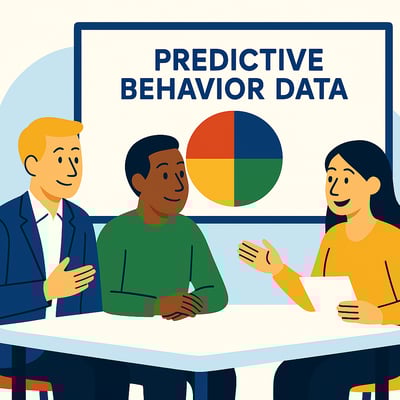
Great consultants guess. Exceptional ones predict.
Most proposals fall flat for a simple reason. They describe what you will do, but they do not predict what will happen once you do it. Executives want confidence, not concepts. They want proof that you understand their people under pressure and the outcomes that follow from that behavior.
That is where predictive behavior data changes everything.
👉 Want your proposals to make jaws drop? Use predictive behavior data
A proposal can be polished and still feel generic. Session outlines, learning objectives, and promises of transformation appear in almost every deck. The issue is not structure. The issue is certainty.
Leaders are asking a quiet question. How do I know this will work here, with our people, in our pressure. If your proposal cannot answer that question, doubt fills the gap. Predictive behavior data closes it by showing not only what you will deliver but what the team will do differently because of it.
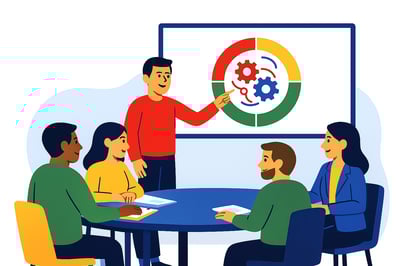
Prediction moves you from selling programs to selling precision. Instead of saying you will improve communication, you show how this specific team misfires under stress and how your method will resolve it before it becomes costly.
What this sounds like. Your leadership group operates across different Modes. Urgency in Red, optimism in Yellow, reflection in Blue, and order in Green.
Under stress those Modes collide. Our approach maps these shifts before they happen so collaboration accelerates instead of stalls. That paragraph does more than promise. It demonstrates foresight.
Predictive data signals competence before the engagement begins. It tells clients you understand complexity, you are measuring culture fit rather than guessing, and you anticipate resistance rather than reacting to it.
It also proves that you focus on outcomes that move, not just activities that happen. Executives trust what they can see and verify, and predictive data gives your recommendations a backbone.
MyHardWired maps where people operate at their best, where they were trained to cooperate, and where they go under stress.
This three mode view predicts how a team will behave before a project starts. In a proposal, that insight becomes credibility on the page.
You can say with confidence. Based on your profile mix, decisions stall at the Green detail layer while Red urgency raises frustration.
Our facilitation prevents that stall by sequencing decisions and translating across Modes in the moment.
Clients lean in when they can see themselves in your document. They respond to language that mirrors their dynamics, to visual summaries they can share with stakeholders, and to confidence that sounds like partnership rather than performance.
Predictive behavior data makes that shift natural because it names patterns leaders already feel but have not been able to quantify.
Begin with a brief behavioral snapshot. Offer a sample three mode profile or team mix that links wiring to results. Translate insight into outcomes the business values.
For example, this mix predicts high creative flow and potential burnout, so we will pace delivery in sprints that protect Green stability. Add predictive KPIs that leaders can defend. Decision cycle time reduced twenty to thirty percent.
Conflict recovery time improved forty percent. Meeting length decreased by one third.
Close with a forecast that paints a picture of life after alignment. Within ninety days leaders anticipate friction points before they escalate, cutting rework and emotional fatigue.
Open your last proposal and highlight every sentence that describes activity.
Then ask, could I show what will happen if we do this.
Add one predictive behavior statement to each major deliverable. You have just raised perceived value without changing scope.

Clients approve certainty, not slogans.
This guide shows how to turn MyHardWired insights into proposal language that predicts human behavior, defines leading indicators, and reports movement that survives budget review.
For Individuals → See how predictive insights reveal what drives your performance and decisions
For Teams → Use predictive behavior mapping to design alignment and avoid friction
For Consultants → Turn predictive behavior data into your proposal advantage
Generic is forgettable. Signature is remembered.
Understand true motivation by aligning it to individual needs. Discover how different motivational styles can transform your leadership approach.
Your best work happens where your preferred mode meets work, not where it doesn’t.
Be the first to get new articles on Preferred Style, Expectations, and Instinctive Mode and practical ways to lead, coach, and hire in alignment with how people are actually wired.