Wired To Work
Conflict as Data: How Decoding Tension Beats Avoiding It
When teams sweep conflict under the rug, trouble festers. Understanding it changes everything.
Enhance self-awareness and personal growth with MyHardWired Behavioral Assessments by understanding how you react under pressure and make changes.
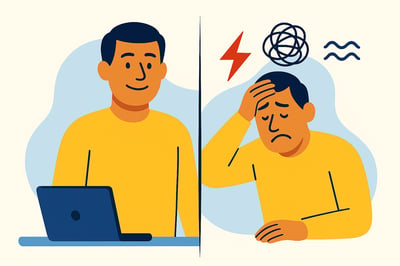
Knowing who you are under pressure is the heart of real growth.
You’ve likely taken personality quizzes. “What type are you?” or “What’s your dominant trait?” These tools help you understand your preferences. But real growth springs from understanding how you behave when conditions change.
Behavioral assessments go deeper. They don’t just tell you who you think you are. They show you how you shift under stress, how you’re wired to operate, and where your blind spots live. That’s how they amplify self-awareness and help you change more intentionally.
Self‑awareness assessments aim to make the invisible visible. They:
But not all assessments are built the same. The ones that describe only stable traits miss the dynamics of real life. That’s where behavior systems bring the difference.
Trait or type tests like Myers‑Briggs, DISC, or Big Five paint a picture of your default style in low-threat conditions. They tell you what you prefer when things are stable.
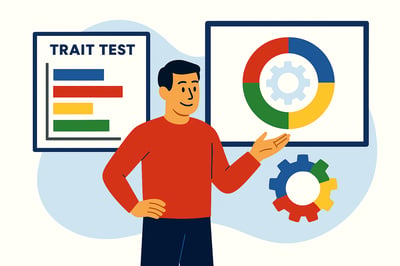
The MyHardWired Behavioral Assessment maps behavior in motion. It reveals:
Because behavior tools track mode shifts, you get clarity on when you move, why you move, and how to pause, not just what box you're in.
Here are a few examples of what people discovered and shifted:
👉 What if you could see your blind spots before they trip you up?
In each case, awareness changed not just understanding but behavior, decision-making, relationships, and energy management.
Understanding behavior is powerful. But awareness without practice fades. Here are five daily moves:
These micro-experiments convert awareness into growth, not just insight.
Over time, you’ll build a library of self-insight that deepens your behavior, not just your self-concept.
You’ve explored awareness in motion. Now capture it in a measurable map.
For Individuals → Learn how to spot your behavioral patterns faster and shift them with intention
For Teams → Build shared language around behavior to replace assumptions with understanding.
For Consultants → Equip clients to turn insight into sustainable behavior change.
When teams sweep conflict under the rug, trouble festers. Understanding it changes everything.
Stress reveals more than you think. Teams show consistent behavior when under pressure.
Personality tests tell what; behavior tells who you become under pressure.
Be the first to get new articles on Preferred Style, Expectations, and Instinctive Mode and practical ways to lead, coach, and hire in alignment with how people are actually wired.