What is MyHardWired

The Role of Psychometrics in Leadership Assessments: What Really Matters

Discover the science behind psychometric tools in leadership assessments and how MyHardWired stands out with reliable, actionable insights.
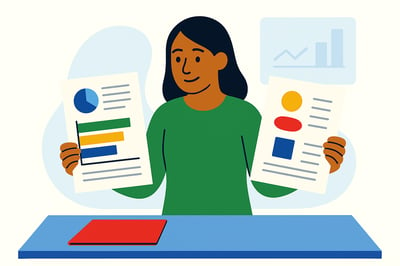

A professional reviews two different assessment reports side by side—one simple and abstract, the other structured and data-driven—illustrated in a flat MyHardWired style to highlight the contrast between rigorous and superficial measurement tools.

Not all behavioral tests are created equal. Know the science behind behavior measurement.

When companies invest in leadership assessments, many reach for “psychometric tools.” The term sounds rigorous. But what does it really mean? And more importantly, how do you separate tools that look impressive from those that perform reliably in real leadership contexts?

This post digs into what psychometrics are, why validity and reliability are non‑negotiable, common pitfalls in leadership assessment tools, the right questions to ask, and how MyHardWired aligns with best practices in measurement.

👉 How solid is the science behind your favorite leadership test? 

What Are Psychometric Assessments Anyway?

Psychometrics refers to the science of measuring mental capacities, processes, and behavioral traits. In leadership assessment, a psychometric tool aims to quantify attributes such as decision style, emotional regulation, or stress response.

Good psychometrics offers:

  • Standardization (same rules for everyone)
  • Norming (comparison against a reference population)
  • Statistical rigor (reliability coefficients, validity proof)

It is not a magic label. It’s a framework. When done right, it builds trust in what the assessment claims to show.
Why Validity and Reliability Are Foundational

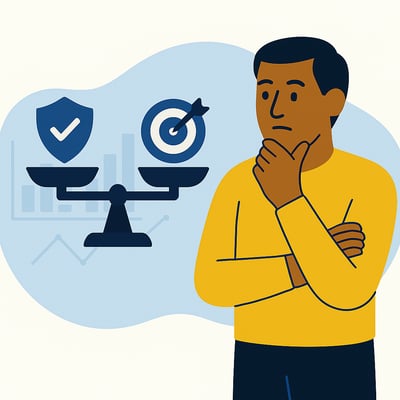
A leader thoughtfully evaluates a balanced scale with icons representing reliability and validity, symbolizing the need for both in strong psychometric tools, illustrated in a clean, flat MyHardWired visual style.

These two terms are often mentioned. Most users treat them like checkboxes. But weak performance in either undermines the whole tool.

  • Reliability means consistent measurements over time. If conditions haven’t changed, your score shouldn’t swing wildly.
  • Validity means the assessment measures what it says it measures. More importantly, it should predict real outcomes, not just internal consistency.

In leadership applications, you want both. A tool might reliably measure something (internal consistency) but measure the wrong thing (low validity). That leads to false confidence.

Common Issues in Leadership Psychometric Tools

Too many tools in the market fall short of real-world utility. Here are usual problems:

  • Weak Norming Samples
    Companies use student populations or non-leader groups to norm a leadership tool. That misaligns expectations in real settings.
  • Lack of Predictive Evidence
    Many tools don’t publish longitudinal data showing scores correlate with leadership success, retention, or team performance.
  • Neglecting Behavior Under Stress
    Tools may measure preferred style in calm settings but ignore how behavior changes under pressure. That’s a blind spot.
  • Opaque Scoring and Weights
    Users can’t see how trait scores are calculated or how much weight each dimension carries. That reduces trust.
  • Fixed Interpretations
    Many assessments present fixed profiles (“You are X type”) without allowing for nuance, context, or change over time.

When you use a tool with these flaws, you may end up coaching based on labels, not behavior and miss deeper gaps in leadership impact.

What to Ask Before You Adopt Any Psychometric Tool

Don’t buy on branding or buzzwords. Use this shortlist to evaluate rigor and fit:

  • What population was this normed on?
    Does it reflect your sector, leadership levels, or geographic context?
  • What is its test‑retest reliability?
    If someone retakes it in a month, do core results hold?
  • Does it predict outcomes?
    Are there studies showing its scores correlate with real business metrics?
  • How transparent is the methodology?
    Can you see scoring logic, trait weightings, and mode shifts?
  • Does it account for behavior shifts?
    Can it measure how someone’s style changes under stress, not just baseline?
  • Is the model maintained and updated?
    Are there ongoing validity studies and model enhancements?
  • How actionable is it?
    Is the result a static profile or a blueprint for growth, change, and feedback?

If the tool fails several points, you’re at risk of accepting misleading insight.

How MyHardWired Aligns with Psychometric Best Practices

We built MyHardWired to meet rigorous measurement standards while delivering genuine behavioral insight.

  • Broad Norming & Role‑based Samples
    The model is normed across industries, leadership levels, and geographies. It speaks to the complexity of real work contexts.
  • Behavior Over Time
    We map behavior in three Modes which are Preferred, Expectations, Instinctive, not just a static snapshot. That’s stronger predictive value when leadership pressure increases.
  • Test-Retest Design
    Scores are built to remain stable unless real behavior change occurs. Results are not noise.
  • Transparent Trait Logic
    Users see how traits combine, how Modes interplay, and how each score is derived.
  • Ongoing Validation
    We track how behavioral profiles link to outcomes such as engagement, retention, conflict, promotion velocity, and team performance. The model evolves based on real data.
  • Actionability
    The goal is not just insight but transformation. Behavior becomes code you can act on in role design, rhythm, relationships, and feedback.

These alignments make MyHardWired more than an assessment. It becomes a behavioral map you can trust and use.
Psychometric Checkup

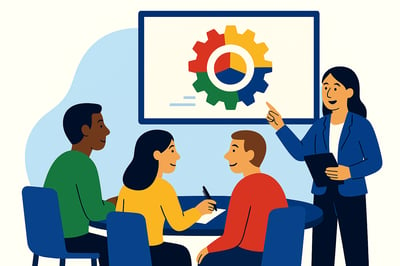
A consultant presents a circular behavioral model displayed on a screen, layered over a four-quadrant MyHardWired gear in the strict color order—red top-left, yellow top-right, green bottom-left, blue bottom-right—while a small group of leaders sits around a table discussing the data.

  • Think of one leadership assessment you’ve used or considered.
  • Ask yourself: Did it check the criteria above? Reliability, norming, predictive evidence?
  • Compare how well its insights aligned with real-world experience.
  • List one gap in its insight (e.g. stress behavior, mode shifts).
  • Imagine making a decision (hiring, coaching, role design) only if you had a tool that met all criteria. What would change?

This is how your threshold for insight rises especially in leadership contexts.

Ready to See Behavior Measured the Right Way?

Move beyond personality tests to behavioral science you can trust.

Get The Guide

Keep Building on the Data

For Individuals → Learn to read results like a scientist and understand what every score actually measures.

For Teams → Choose assessment frameworks that strengthen trust instead of stereotypes.

For Consultants → Bring evidence-backed assessments to clients who expect more than color charts.

Get notified on new behavioral insights


Be the first to get new articles on Preferred Style, Expectations, and Instinctive Mode and practical ways to lead, coach, and hire in alignment with how people are actually wired.