Wired To Work
The 4 Conflict Archetypes: How Stress Reveals Who We Really Are
Stress doesn’t create who you are. It reveals who you are. Recognize your behavior to lead better.
Some people fill your cup. Others drain it. Knowing which is which changes everything.

Some friendships fill you up. Others quietly drain you dry. You leave a conversation either lifted or heavy, clear or confused. It’s tempting to blame personality clashes or busyness, but often the reason runs deeper. The difference is behavioral wiring.
When you understand how you are wired and how the people around you are wired, you begin to see why some relationships feel effortless while others feel like work. You also learn how to protect your energy without guilt.
See how MyHardWired reveals your unique wiring
Every interaction either gives or takes energy. Sometimes the exchange is obvious. Sometimes it’s subtle. Two friends can spend the same amount of time together and walk away feeling completely different.
That’s because each person brings their own communication expectations, interpersonal needs, and stress patterns to every interaction. When those align, energy flows naturally. When they don’t, energy leaks quietly over time.
Energy, in that sense, is a behavioral signal. It tells you when connection fits your design and when it doesn’t.
Each behavioral pattern creates its own rhythm for connection.
When you begin to see these rhythms in yourself and others, relationships become more readable. You stop personalizing the differences and start managing them with intention.
Explore how behavior drives connection
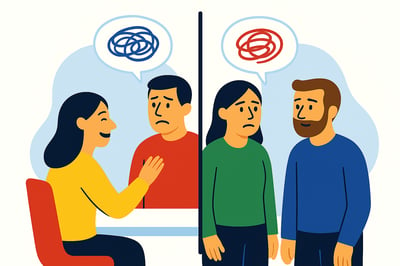
You don’t need a complex formula to know which relationships are healthy for you. Your body already gives you the data.
After time with someone, ask yourself:
Energizing relationships complement your wiring. Exhausting ones often contradict it. This isn’t about right or wrong personalities, but it’s about behavioral fit. Once you recognize the pattern, you can adjust the rhythm without guilt.
When relationships begin to drain us, we tend to speak in vague emotional terms: “I need space.” “I’m just tired.” “It’s not you, it’s me.” Those phrases communicate distress, not direction.
Behavioral language changes that. It turns emotion into information.

Healthy boundaries are not barriers. They are clarity in practice.
When you design boundaries around wiring, you stop managing people and start managing energy. You preserve space for connection that sustains you.
The Wired for Growth guide shows how behavioral awareness transforms relationships of every kind like friendships, teams, and families alike. It explores how Preferred, Expectations, and Instinctive Modes shape the flow of energy, trust, and communication, and how clarity builds stronger, healthier connection.
For Individuals → Learn how to recognize energy patterns in your relationships and build habits that protect your wiring
For Teams → Turn interpersonal tension into alignment by designing communication rhythms that energize collaboration
For Consultants → Add behavioral energy mapping to your toolkit and help clients build relationships that sustain both performance and trust
Stress doesn’t create who you are. It reveals who you are. Recognize your behavior to lead better.
Certification is more than taught. It’s lived and that’s what clients see.
Promotion rewards you. MyHardWired reveals what it costs.
Be the first to get new articles on Preferred Style, Expectations, and Instinctive Mode and practical ways to lead, coach, and hire in alignment with how people are actually wired.