Conflict isn’t a breakdown. It’s a signal. Teams who decode it grow.
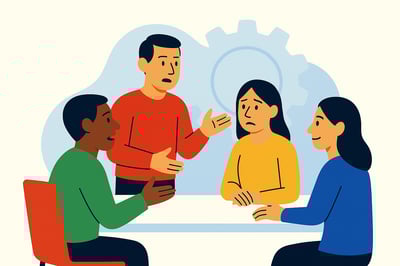
Conflict isn’t a failure of teamwork. It’s proof that people care enough to speak up.
Handled well, conflict becomes your team’s most valuable growth data. Handled poorly, it becomes the story everyone tells for the next six months.
👉 Want conflict that moves you forward instead of backward?
The Reframe That Changes Everything
Most leaders try to avoid conflict. Some try smoothing over tension, redirecting emotion, or waiting it out. But conflict isn’t the problem. Undecoded conflict is.
When leaders see conflict as data and not drama, they stop fighting behavior and start learning from it.
Each disagreement becomes a chance to see what people value, how they communicate, and what they need to feel safe.
That’s what MyHardWired helps you do: translate tension into a behavioral map you can actually use.
What Conflict Is Really Showing You
When pressure rises, everyone’s Instinctive Mode surfaces. That’s your behavioral autopilot or the wiring that drives your reactions when trust or safety drop.
Here’s how that looks in motion:
The Rule Enforcer
Tightens process to regain control. Conflict signals fear of disorder or risk. Growth move → Loosen grip selectively. Define “good enough” so progress can resume.
The Driver
Pushes faster under pressure. Conflict signals blocked momentum. Growth move → Practice patience. Slow down long enough to hear the “why” behind resistance.
The Harmonizer
Smooths tension to protect connection. Conflict signals fear of disconnection. Growth move → Stay in the conversation. You don’t have to fix the mood to make progress.
The Challenger
Questions assumptions when stakes rise. Conflict signals lack of logic or clarity. Growth move → Channel curiosity into structure by naming your questions, then moving to decision.
Each reaction makes sense once you see the wiring beneath it.
When Conflict Becomes a Growth Moment

Let’s imagine a cross-functional project review:
The Green compliance officer stops the room: “We’re skipping critical steps.”
The Red project lead insists on hitting the deadline: “We can’t miss another week.”
The Blue strategist wants to revisit assumptions: “What’s the real problem we’re solving?”
The Yellow coordinator worries about morale: “People are burning out; they need a win.”
In the moment, this looks like chaos. But in behavioral language, it’s balance.
Green brings method.
Red brings momentum.
Yellow brings morale.
Blue brings meaning.
If you can name that pattern, you can use it.
Leader micro-script: “We have a speed vs. certainty vs. morale vs. control tension. Let’s take each in one sentence. What’s non-negotiable for you?”
That’s how conflict becomes collaboration.
Tools for Turning Tension Into Growth
The Conflict Debrief
After a heated discussion, take five minutes to answer:
-
-
What did each person need to feel heard?
-
Which Instinctive Mode was in charge?
-
What could have balanced it next time?
-
The Behavior Replay
Use your team sheet to replay the conversation with colors visible. Seeing patterns turns blame into insight.
The Micro-Reset Phrase
Use these to keep emotion from overtaking meaning:
🟢 “Let’s map one safe next step.”
🔴 “Let’s pause before we decide.”
🟡 “We’ll stay open while staying honest.”
🔵 “What’s the real question we’re solving?”
Each one de-escalates without dismissing the point.
Maturity in Conflict Comes From Repetition
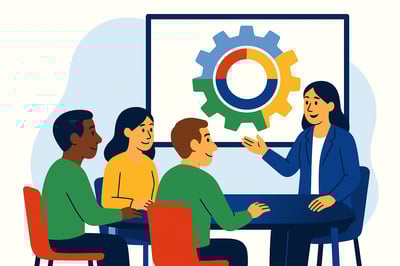
Teams don’t master conflict by avoiding it. They grow by decoding it faster each time it happens.
A mature team can say:
“We’re in a loop.” Red and Green are clashing again.”
“This is Yellow avoiding tension.”
“Blue needs clarity before committing.”
That’s the power of a shared behavioral language.
You don’t need a mediator, just a mirror.
The Growth You’re Avoiding
Ask yourself or your team these questions this week:
- Where does conflict keep resurfacing, and what’s it teaching you?
- Which behaviors rise first when pressure hits?
- How might this disagreement be data about unmet needs instead of poor intent?
Conflict isn’t a breaker. It’s a diagnostic.The teams that learn from it grow faster, trust deeper, and recover stronger.
Get the Guide
This blog showed how conflict reveals needs. The guide shows every mode behind them.
Next Steps for Growth
For Individuals → Learn what triggers you and how to reset faster
For Teams → Decode communication clashes before they escalate
For Consultants → Equip clients to translate conflict into alignment using MyHardWired