What is MyHardWired
Preferred Mode Tasks: Why Matching Your Work to Your Behavior Changes Everything
Your best work happens where your preferred mode meets work, not where it doesn’t.
Distance doesn’t erase behavior. It hides what happens under the surface.
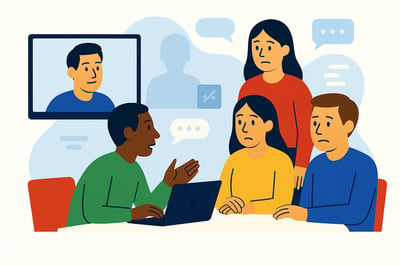
Distance doesn’t erase behavior. It just hides it behind screens, silence, and Slack threads.
In the office, you can feel tension build. In remote work, it vanishes into muted mics and unread messages. That’s why many leaders say, “Our remote team is fine” right before burnout, friction, or disengagement quietly spreads.
👉 Leading remote? See what your team’s behavior looks like off-zoom
Every team runs on behavior like how people communicate, cooperate, and recover under stress.
In remote settings, those behavioral cues are muted or misread.
The same wiring that works in person often clashes online:
Greens tighten rules to feel control.
Reds drive faster than others can keep up.
Yellows overcompensate with emojis and energy.
Blues go silent to process.
Without context, each action looks like attitude: urgency becomes pressure, silence becomes disengagement, caution becomes resistance.
The result? Teams start guessing at intent instead of aligning on reality.
Here’s how most remote friction starts:
“They’re ignoring me.”
“They’re micromanaging.”
“They’re too negative.”
When leaders can’t read behavior, they can’t lead through it.
Knowing your team’s MyHardWired profile gives you clarity before friction builds:
Green, The Rule Enforcer: Values predictability and structure.
Remote risk: tightens control when updates feel uncertain.
What helps: visible workflows and clear communication boundaries. “Here’s our schedule and where updates will live with no surprises.”
Red, The Driver: Craves urgency and ownership.
Remote risk: pushes too fast without buy-in.
What helps: clear goals, defined deadlines, and fast feedback loops. “You own this outcome. Share one key update by end of day.”
Yellow, The Harmonizer: Thrives on connection and recognition.
Remote risk: energy fades in silence or long gaps.
What helps: visible acknowledgment and collaborative check-ins. “Let’s open with a quick win-share: What’s one thing that worked this week?”
Blue, The Challenger: Seeks understanding and rationale.
Remote risk: overthinks without discussion, feeling disconnected from purpose.
What helps: space for questions, clarity of “why,” and deeper syncs. “We’ll pause five minutes to talk through the reasoning: What questions are still open?”
Behavioral visibility online isn’t about personality.
It’s about providing what each mode needs before stress shows up on camera.
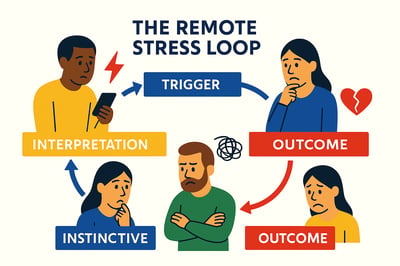
You don’t need to see your team in person to make wiring visible. You just need to design for it.
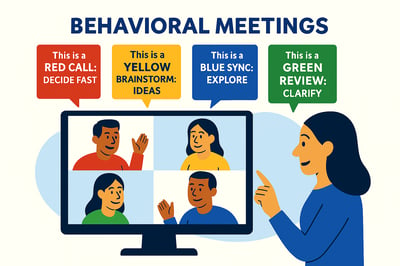
Begin every meeting with “what mode are we in?”“This is a Red call: We’ll decide fast.”
“This is a Blue session: Let’s explore.”
It sets tone and pace upfront, avoiding mismatch later.
Use a MyHardWired team dashboard.
See your distribution of Preferred, Expectations, and Instinctive Modes. It shows who thrives on flexibility, who needs guardrails, and who might go quiet under stress.
Rotate communication formats: Reds prefer concise messages. Yellows need live conversation. Blues want thoughtful threads. Greens rely on documented clarity.
Balance each style weekly.
Ask yourself:
Behavior visibility is the new leadership advantage in remote work. When you can see how people are wired, you stop guessing and start leading what’s real.
This post scratches the surface. Explore every behavioral mode and learn how to design virtual meetings that energize instead of drain.
For Individuals → Turn camera-off days into clarity by understanding what energizes or drains you remotely
For Teams → Align communication styles before meetings begin and watch collaboration speed up
For Consultants → Help distributed clients translate behavior patterns into connection and trust
Your best work happens where your preferred mode meets work, not where it doesn’t.
Discover why behavioral fit is crucial in hiring and how MyHardWired assessments can help you find the right candidates for your team.
Align leadership behavior with role demands to sustain success. MyHardWired tools can help identify and support the perfect fit for your leaders.
Be the first to get new articles on Preferred Style, Expectations, and Instinctive Mode and practical ways to lead, coach, and hire in alignment with how people are actually wired.