Wired For Growth
Communication Clarity in Relationships: Why Good Intentions Aren’t Always Enough
When you know how someone hears you, “good intention” becomes felt connection.
Team behavior can prevent burnout and maintain consistent energy. Learn to align work with natural modes for sustained productivity and engagement.
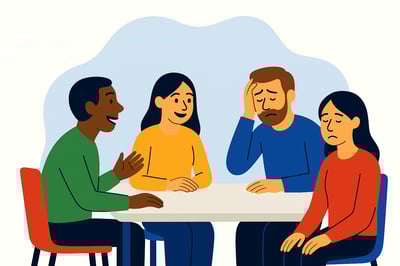
Team performance isn’t just about skill or strategy. It depends on what’s behind how people are wired.
Some weeks, your team is unstoppable and ideas flow, decisions move, momentum hums. Other weeks, the same team feels heavy. Conversations drag. Progress slows. Energy disappears.
That swing isn’t random. It’s behavioral.
When you understand how wiring drives team energy, you stop mistaking motivation problems for alignment problems, and you can finally manage what’s really going on.
👉Want your team’s momentum to stay steady and not spike and crash?
Teams don’t burn out because of workload.
They burn out because they’re working against their wiring.
Every person runs on 3 different modes. The Preferred Mode is the behavioral gear where they feel energized and effective.
When they get to work in that gear most of the time, energy builds. When they’re forced out of it too long, it bleeds away.
Green thrives on order and accuracy. Chaos drains them.
Red thrives on action and urgency. Delays drain them.
Yellow thrives on collaboration and positivity. Silence drains them.
Blue thrives on creativity and exploration. Over-control drains them.
When work design, leadership style, or team culture clash with those behavioral gears, you don’t just lose focus.
You lose fuel.
If your team is inconsistent. You might have a high one week and be sluggish the next.
You’re seeing behavioral imbalance at play.
|
Team Pattern |
What’s Really Happening |
Energy Result |
|
All Reds, no Greens |
Everyone’s sprinting, no one’s safeguarding quality. |
Burnout |
|
All Greens, no Reds |
Everyone’s checking process, no one’s deciding. |
Stagnation |
|
All Yellows, no Blues |
Optimism everywhere, little follow-through. |
Over-commitment |
|
All Blues, no Yellows |
Deep ideas, no visible connection. |
Disengagement |
Balance doesn’t mean sameness, but it does mean every Mode gets to contribute.
When one dominates, energy spikes and crashes instead of sustaining.
👉 Seeing these patterns in your team? See your team profile
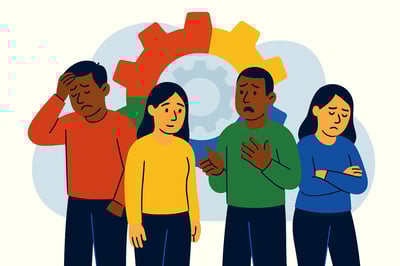
If you’ve tried pep talks, perks, or “team days” with limited success, here’s why they don’t last: they treat symptoms, not wiring.
Fatigue isn’t about effort. It’s about friction between how people are built and how they’re being asked to work.
Once you can see your team’s behavioral map, you can rebalance energy instead of draining it.
Let Greens build the systems that sustain quality.
Give Reds ownership of quick wins and decision authority.
Put Yellows at the center of communication and morale.
Involve Blues early to test ideas and forecast risks.
When each person’s Preferred Mode is visible and valued, accountability feels natural, not forced.
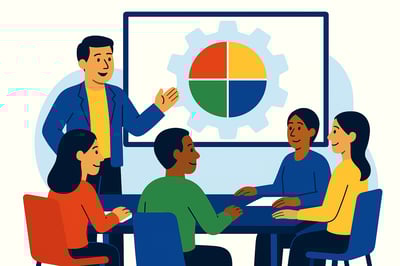
Other tools label personality.
MyHardWired measures behavior in motion across three dimensions:
Preferred Mode: → What fuels you.
Expectations Mode: → How you cooperate.
Instinctive Mode → What you need to feel secure under pressure.
Together, this creates individual transformation and these three modes create a living behavioral dashboard that you can read, share, and lead from.
Energy isn’t random. It’s the signal that behavior and work are either aligned or fighting each other.
Ask yourself:
You’ve just seen how team energy fluctuates day-to-day. But this is only one piece of your behavioral blueprint.
For Individuals → Learn what truly fuels your motivation and how to protect it in high-demand seasons
For Teams → Map every member’s wiring to balance urgency, stability, and creativity for sustained energy
For Consultants → Help clients decode the behavioral signals that predict team burnout and prevent it
When you know how someone hears you, “good intention” becomes felt connection.
Discover the hidden costs of leading with someone else's map and learn how to align leadership with your natural strengths for authenticity and...
Learn to match your communication style to how others hear, ensuring your message lands effectively and enhances team alignment.
Be the first to get new articles on Preferred Style, Expectations, and Instinctive Mode and practical ways to lead, coach, and hire in alignment with how people are actually wired.