What You Will Learn (in five minutes)
From this page, you will be able to:
-
See why good teams break down even when the strategy looks right
-
Understand three recurring patterns that quietly drain team performance
-
Learn how the three MyHardwired modes show up at the team level
-
Recognize how behavior shapes communication, collaboration, and conflict
-
Notice practical ways to use wiring to reduce friction and increase flow
Who This Page Is For
-
Executives and team leaders who want their teams to move together rather than in pieces
-
Human resources and talent leaders who want development that changes daily behavior
-
Consultants and coaches who want a clear language for what they already sense in rooms
-
Individual contributors who want to understand why the team feels the way it feels
Why Good Teams Break Down
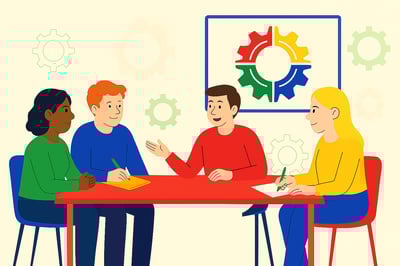
On paper, some teams should win easily.
A hospital unit has excellent clinicians, yet tension between nurses, physicians, and administrators quietly creates stress and mistakes.
A plant has expert operators, yet engineering and production keep stalling each other with competing ideas of the correct way to proceed.
A startup has very capable people, yet meetings feel like improvisation with no shared rules for prioritizing, deciding, or following through.
These situations are not random. They are the result of invisible friction. Communication misses happen because people expect different levels of detail, pace, and tone. Collaboration feels like a tug of war between speed and structure, vision and detail, action and consensus. Conflict drains energy because stress patterns become personal instead of decoded.
Talent assembles the roster. Behavior decides whether that roster plays like a team.
Three Patterns To Watch For

Certain breakdown patterns appear again and again across industries and team types.
Communication Silos
Everyone listens through a behavioral filter.
Some people are listening for facts and proof.
Some people are listening for a short clear request.
Some people are listening for positive tone and shared purpose.
Some people are listening for the reasoning and the trade offs.
When those filters are not met, people stop listening and often insist they were never told. The problem is not always the message. It is the fit between the message and the listener.
Collaboration Stalls
Collaboration is not about everyone trying harder together. Collaboration is about aligning different kinds of energy.
Some people move quickly and want to see progress now.
Some people are careful and want a working process.
Some people think in big pictures and want direction and options.
Some people are people centric and want genuine buy in.
When these styles remain unnamed, collaboration becomes a stalemate. Each group is convinced that their way is the only responsible way to work.
Conflict Spirals
Under stress, people do not all react in the same way.
Some tighten control.
Some push for speed.
Some over include and try to keep everyone happy.
Some step back to think and gather information.
Without language for these patterns, stress looks like character. Meetings replay the same loops. People get labeled as difficult rather than different.
Leaders often respond with more meetings, more reminders, or more generic team events. Without visibility into behavior, it does not stick.
Your Team Behavioral Blueprint

Every person brings three dimensions of behavior. Individually, they explain how someone leads and works. Together, they create your team blueprint.
Preferred Mode At Work
Preferred Mode describes what each person naturally offers when they are at their best.
For some, that contribution is precision. For others, it is urgency. For others, it is optimism. For others, it is new ideas. Each of these is fuel when the role matches the person.
If you stack only urgency on a team, the team sprints and then stalls. If you stack only precision, the team moves very slowly. Balance of Preferred Modes matters.
Expectations Mode At Work
Expectations Mode describes how people expect to be approached if you want their cooperation.
Some expect structure and sequence.
Some expect speed and directness.
Some expect inclusion and open conversation.
Some expect space to question and think.
These expectations are socialized. Family life, cultural norms, and early workplaces teach us what respect sounds and feels like. In some contexts, a thorough explanation is polite. In other contexts, brevity is respect.
Naming Expectations Modes prevents accidental disrespect.
Instinctive Mode At Work
Instinctive Mode describes what surfaces under pressure or in total release.
Some people tighten control when stress rises.
Some demand faster movement.
Some over reassure and pull more people into the conversation.
Some withdraw to think and regain clarity.
When Instinctive Modes collide on a team, people mistake differences for disrespect. Once you can see Preferred Mode, Expectations Mode, and Instinctive Mode across a team, you can begin to predict where energy will flow, where friction will start, and how stress will show up.
Communication That Actually Lands
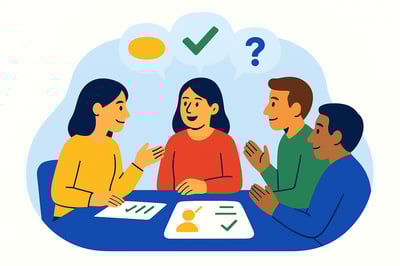
Many communication workshops focus on choosing the correct words. The real leverage is in matching pace, detail, and tone to how people hear.
Communication breaks down in a few familiar ways.
Pace clash. The teammate who values results hears careful discussion as stalling. The teammate who values precision hears quick moves as reckless.
Detail clash. The structured teammate needs specifics. The visionary teammate offers clouds and themes.
Tone clash. To the direct teammate, blunt speech feels like respect and honesty. To the harmony focused teammate, blunt speech feels like attack.
Wired communication starts with a simple set of questions before you walk into a conversation.
-
Who in this group needs more detail to feel confident
-
Who needs a stronger sense of urgency to stay engaged
-
Who needs inclusion to lean in
-
Who needs some processing time before they can speak clearly
When you answer those questions, you are already part way toward communication that sticks.
You can think about the Colors at the same time, always in this order.
Green ears want clear steps and facts.
Red ears want the main point and the timing.
Yellow ears want connection and an understanding of who is involved.
Blue ears want logic and an understanding of why this matters.
A single message rarely satisfies every need fully. The art is to acknowledge each pattern enough that people stay with you.
Collaboration Without The Drag
Collaboration fails when teams expect everyone to work in the same style. Strong teams do not erase differences. They use them on purpose.
Think about two natural clusters.
One cluster enjoys rapid ideas and flexible plans. To others, this looks chaotic and hard to follow.
Another cluster enjoys sequence and reliability. To others, this looks rigid and resistant to change.
Neither cluster is wrong. Together and clearly named, they can form a powerful cycle of options, road map, execution, and feedback.
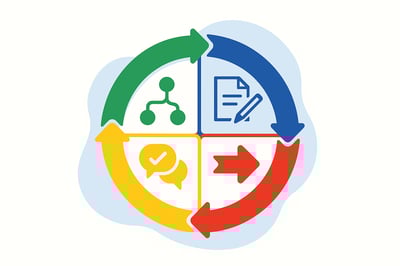
Wired collaboration asks a few practical questions.
-
Who on this team prefers to generate options
-
Who prefers to turn options into a plan
-
Who prefers to move the plan into action
-
Who prefers to check results and refine the system
Often you will find that Green members enjoy building reliable systems, Red members enjoy driving execution, Yellow members enjoy coordinating people and maintaining momentum, and Blue members enjoy exploring ideas and testing the logic of the plan.
When you assign work by behavior rather than guesswork, handoffs become cleaner and projects feel less heavy.
Treat Conflict Like A Dashboard
Conflict is information. It shows you which needs are not being met.
The four Colors give a simple view of stress patterns on a team. These are behaviors, not boxes.
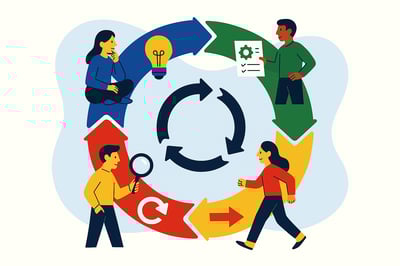
Green under stress often becomes a rule enforcer. Green says, show me the process and the history. The strength of Green is that it catches risk. Green needs an understandable sequence and clear proof.
Red under stress often becomes an urgency driver. Red says, decide and move. The strength of Red is momentum. Red needs a clear path and enough ownership to act.
Yellow under stress often becomes a harmonizer. Yellow says, keep people engaged and avoid unnecessary harm. The strength of Yellow is morale. Yellow needs safe tone and a sense that people are included.
Blue under stress often becomes a challenger. Blue says, what is the rationale. The strength of Blue is deep thinking. Blue needs space to question and enough time to process.
When you see these patterns as signals rather than problems, you can direct the energy. A simple sequence that works in many rooms looks like this.
- Read the signal. Ask whether this is about speed or detail, about inclusion or clarity, about meaning or deadline.
- Surface expectations. For example, you might hear, I expect a plan before we move, or, I expect progress today.
- Name the needs. People may need control, authority, inclusion, or understanding.
- Design a both and move. Decide now and add a checkpoint. Time limit questions. Invite voices early with a clear agenda.
When you treat conflict as a dashboard, you move from firefighting to guided adjustment.
Wired Teams In The Real World
It helps to see what wired teamwork looks like in practice.
A product group in a software company struggles with repeated debate around releases. Green team members want more testing. Red team members want features in the hands of customers. Yellow team members worry about customer support load. Blue team members worry about long term impact and technical debt.
Once the team names the patterns, they create a simple sequence. Blue identifies a small set of higher risk concerns. Green defines a small group of essential checks. Red sets a realistic release date and owns decisions about trade offs inside that window. Yellow plans communication for customers and internal teams. Existing tension does not disappear overnight, but the loops shorten and decisions stick.
A school leadership team faces repeated frustration around schedule changes. Green leaders want predictable routines. Red leaders want fast responses to new demands. Yellow leaders want staff to feel considered. Blue leaders want to discuss the deeper trade offs.
They sketch a shared play. Blue surfaces the main trade offs in a short written note. Green proposes a stable option and a backup option. Red decides a time frame for action. Yellow designs how the change is communicated to staff and families. The team stops repeating the same argument every few weeks and begins using one clear pattern for many different decisions.
Examples like this are not special cases. They show what becomes possible when behavior is visible and named.
Frequently Asked Questions
1. Is Wired To Work Only For Struggling Teams
No. Wired To Work is useful for any team that wants to communicate more clearly, collaborate with less drag, and handle conflict with less damage. It is as valuable for strong teams that want to improve as it is for teams that feel stuck.
2. Do We Need To Use The MyHardWired Assessment First
The ideas on this page stand on their own. The MyHardWired assessment makes them more precise. It shows each person’s mix of Green, Red, Yellow, and Blue in the three modes, which helps you move from general insight to specific plans.
3. Can This Help Remote And Hybrid Teams
Yes. Remote and hybrid teams often struggle with silence, message tone, and uneven participation. Understanding behavioral patterns makes it easier to set norms around response time, meeting structure, and channels for questions.
4. Does Wired To Work Replace Other Team Programs
It does not need to replace anything. You can treat wiring as the foundation that supports other tools you already use. When people understand behavior, communication frameworks, meeting practices, and project methods all have a better chance to stick.
5. How Quickly Can We Expect To See Changes
You will often see small improvements in clarity and tone within a few weeks if you consistently apply the ideas. Larger changes in trust and collaboration build over time as new behavior becomes normal.
6. Is This Only For Leaders Or For Everyone On The Team
It works best when everyone involved has at least a basic understanding of the patterns. Leaders can start by changing how they communicate and design meetings, then invite the team into the language and the process.
What To Do Next
Teams rarely fail for lack of strategy. They fail for lack of behavioral visibility. You now have an overview of why good teams break down and how behavior explains more than most people realize. You understand the three modes at work. You see how Green, Red, Yellow, and Blue show up in communication, collaboration, and conflict.
Your next step is to turn this understanding into deliberate action by getting The Wired To Work Guide and use it to:
-
Map your team behavioral blueprint in more detail
-
Design meetings and handoffs that fit the people in the room
-
Choose one specific conflict pattern and experiment with a different wired response
When you stop treating team problems as random and start treating them as readable patterns of behavior, communication connects, collaboration compounds, and conflict can produce alignment rather than damage.
How Behavioral Assessments Enhance Self‑Awareness for Personal Growth
Knowing who you are under pressure is the heart of real growth.
You’ve likely taken personality...

Why Traditional Leadership Metrics Don’t Measure What Matters
Most organizations measure leadership success through numbers like retention rates, productivity,...
Behavior Visibility: How Seeing What’s Hidden Raises Team Performance
Every team has two versions of itself. The one you see with roles, titles, and meetings. And the...