The Consultant's Edge
How Predictive Behavior Data Makes Your Consulting Proposals Irresistible
Great consultants guess. Exceptional ones predict. Add MyHardWired and proposals win.
Good frameworks get ignored if you don’t address what people believe. Address resistance with clarity.
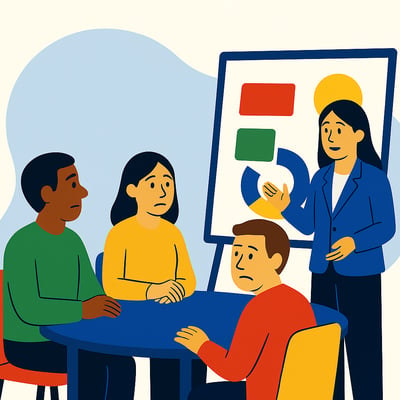
Good frameworks rarely fail because they lack insight. They fail because they clash with what people already believe.
If you have introduced a behavioral framework in a client meeting and felt the temperature drop, you are not alone. Consultants and HR leaders often encounter subtle or direct resistance the moment behavior becomes the topic.
Clients say things like, we have already done personality tests, that sounds too theoretical, our team does not need another assessment. The issue is not the framework.
It is how people hear it.
The MyHardWired model turns resistance into engagement by replacing theory with clarity and labels with motion.
👉 Facing resistance? Present behavior in a way people lean in
Resistance usually reflects one of four mindsets.
We have tried this before.
They have seen tools that describe personality but do not drive measurable change.
This sounds too abstract.
Executives want application, not vocabulary.
We do not want people labeled.
Teams worry that frameworks will box individuals in.
This feels like extra cost.
Without visible ROI, any assessment looks like a line item, not an investment.
Each concern is legitimate. That is why framing matters.
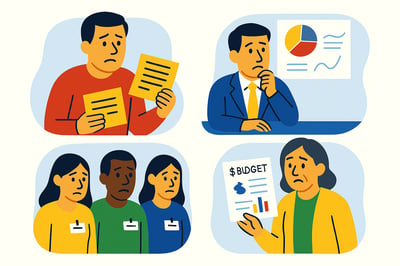
Use the model’s behavioral language to meet each mindset head on.
Objection. We have done this before.
Reframe. You have used tools that describe behavior. MyHardWired predicts it. Most assessments offer static labels that do not account for context or stress. MyHardWired measures three Modes that move with real work.
Preferred shows how people perform when energy flows.
Expectations shows the style they learned to cooperate.
Instinctive shows needs and reactions when pressure spikes.
This three dimensional view makes the framework practical because it explains shifts, not snapshots.
Objection. This sounds too abstract.
Reframe. Behavior is visible. We are naming what you already see. Missed deadlines, tense meetings, repeated decisions. These patterns trace directly to Mode collisions. A leadership team may be operating from urgency Red, flexibility Yellow, concept Blue, and structure Green. When those collide, it is not character. It is misalignment we can map and fix.
Objection. We do not want labels.
Reframe. This is not labeling. It is language.
The goal is not to define people. It is to give a shared vocabulary that reduces judgment and speeds trust. Outcomes and independence Red, collaboration and optimism Yellow, meaning and understanding Blue, clarity and consistency Green. Language turns tension into translation.
Objection. It is too expensive.
Reframe. The framework pays for itself when friction drops. Quantify misalignment costs such as decision lag, rework, and preventable turnover. Then tie behavior to outcomes executives can defend. Faster decisions, fewer escalations, tighter handoffs, lower attrition, higher engagement.
You can lower resistance before it appears by setting context with precision.
Lead with purpose, not process.
This tool helps your existing talent perform better. It does not change who people are.
Keep the focus on outcomes.
Position behavior as the means to alignment, retention, and performance.
Use case data over theory.
Show measurable shifts that follow behavioral clarity such as shorter meetings and improved trust scores.
Involve early adopters.
Let two leaders experience the assessment first and validate accuracy publicly.
Present visuals.
Dashboards and behavior maps signal data, not soft skill training.
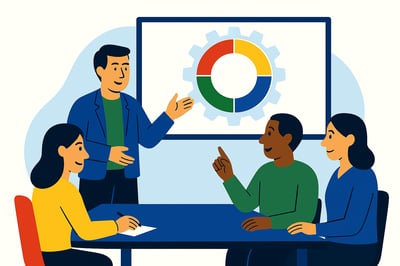
Skepticism means people care enough to ask hard questions. Invite them into the model.
Ask, when you lead change, do you lean more Red direct, Green structured, Yellow adaptive, or Blue conceptual.
The debate becomes discovery and ownership begins.
Sustained adoption requires language that leaders use without you in the room. The guide shows how to frame objections with outcomes, map Mode collisions to visible business costs, and present data that executives can defend at the next budget review.
For Individuals → Understand your wiring and communicate it with confidence in high stakes moments
For Teams → Make behavior a shared operating language that reduces friction and speeds decisions
For Consultants → Present behavior frameworks clients believe in and use long term
Great consultants guess. Exceptional ones predict. Add MyHardWired and proposals win.
Conflict isn’t a breakdown. It’s a signal. Teams who decode it grow.
Winning a client is great. Keeping them is rare. Behavior insight makes the difference.
Be the first to get new articles on Preferred Style, Expectations, and Instinctive Mode and practical ways to lead, coach, and hire in alignment with how people are actually wired.