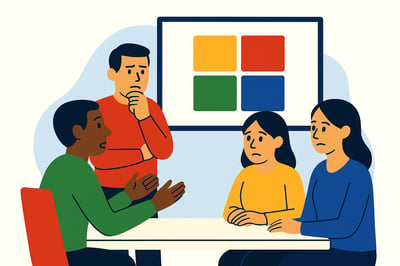
 Labels give you a name. MyHardWired tells you who you are in action.
We live in a world of labels. Introvert. Extrovert. Type A. INTJ. People lean into these systems because they offer clarity. They promise an easy way to explain yourself and others.
But labels also come with risks. They freeze behavior into boxes. They assume you behave the same everywhere and always. Over time, that assumption shows cracks.
This post explores what label systems do well, where they fail, and how behavior-based systems rise above the limits. I’ll show examples of when labels help and when they harm, how MyHardWired avoids the traps, and what to do if you’ve been running on labels all along.
What Label Systems Get Right
Labels simplify complexity. That’s their strength. They help you:
- Create shared leadership language quickly
- Offer entry-level insight for self‑awareness
- Connect with others who “match your type”
- Provide a heuristic to frame strengths
For someone new to self‑discovery, a label can feel like a mirror. It can help you say, “Okay, this is me, now I can explore further.” That’s not worthless. It’s often a necessary first step.
Where Labels Fail You
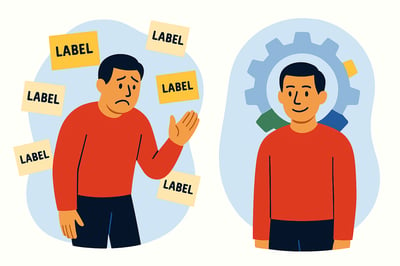
As soon as stress, change, or growth enters, labels begin to break. Here’s how:
- Behavior shifts are ignored. Labels assume you act the same in every context. In reality, under pressure, you shift. A supposedly “calm” type might snap when your needs are violated.
- Labels encourage polarization. You see someone as “that type,” and discount other aspects of them. You label differences as “type error” rather than wiring mismatch.
- They promote fixed identity. When someone says, “I’m an INFP,” it becomes a limiting identity. “That’s just how I am.” It stops curiosity about how you change under stress.
- They breed misinterpretation. Because labels are compressed, two people with the same label may behave very differently. One INTJ might lead with empathy, another with logic depending on their stress behavior and context.
When Labels Hurt: Real Examples
- A “Yellow” label might lead someone to believe they need to be outgoing in every meeting. When fatigue hits, they crash and think their label failed them, not the context.
- An “introvert” may force themselves into extroverted behavior because they believe they “should” and burn out. The label becomes a script to obey, not a clue to navigate.
- Teams may overemphasize label compatibility. “We can’t pair the ‘analytical’ with the ‘creative’ because they’re too different.” That assumption prevents bridging through behavior, not type.
How Behavior-Based Systems Do Better
Behavioral systems like MyHardWired focus on how people act in context, not static type. Here’s how they avoid the label traps:
- They track shifts over time. You see when you move from calm to stressed, or from methodical to reactive.
- They map predictable stress reactions. Labels don’t predict how someone responds under pressure. Behavior models can.
- They emphasize modes, not boxes. You can lead in your favorite mode, but flex into others when needed. You’re not locked into one “type.”
- They give directional insight. Behavior models guide you how to grow, not just where you “fit.”
That’s the edge MyHardWired builds. You don’t get a type label. You get three behavioral lenses, Preferred, Expectations, and Instinctive, and visibility into how you shift across them.
How MyHardWired Avoids Label Pitfalls
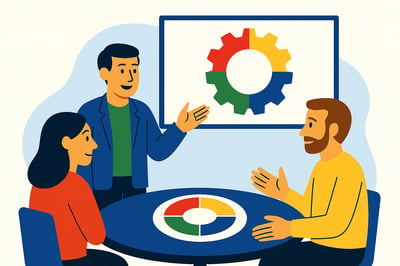
Here’s how the MyHardWired model sidesteps the traps:
- It doesn’t freeze you into “only one mode.” You see your mix across three behavioral dimensions.
- It maps behavior in motion showing how you shift under stress or when you feel blocked.
- It gives you tools to reorient. You see not just what you do, but when and why you do it, and how to respond better.
- It creates a shared leadership language rooted in observation, not judgment so teams can talk about behavior, not identity.
What You Can Do If You’ve Been Running on Labels
If you’ve relied on labels, here are steps to move forward:
- Reclaim curiosity. When you catch yourself thinking, “I’m that type,” ask instead, “How am I behaving right now?”
- Name the shift. Use behavioral language. “I’m shifting into my Instinctive Mode” is more accurate than “I became the wrong type.”
- Test context changes. Try leading differently in low-risk settings, blend modes, vary your approach. Notice how behavior shifts.
- Use assessments as a lens, not a destiny. Tools like MyHardWired give you insight, not a label to lock into.
- Talk about behavior, not type. When coaching or leading teams, help others see behavior as pattern, not personality.
👉 Curious how your own “labels” hold up under stress?
Quick Reset
- Pick one label you’ve held (Myers‑Briggs, DISC, Enneagram, etc.).
- Recall a time when that label “broke” when behavior surprised you.
- Reflect on what you did in that moment instead of assigning it to “type.”
- Replace one statement of label with a behavioral observation:
“I’m acting Green under stress” instead of “I’m just a Green person.”
Watch the difference in how you observe change.
Want the Complete Picture?
You’ve just seen how labels limit what you can see. To understand your full behavioral range including what energizes you, what shifts under stress, and how to realign faster
Get The Guide
Where To Go Next?
For Individuals → Discover what truly fuels your decisions, energy, and confidence so you can stop chasing labels and start leading with clarity.
For Teams → Build a shared behavioral language that replaces judgment with understanding and drives collaboration that lasts.
For Consultants → Equip clients with a dynamic behavioral tool that goes beyond typing to deliver predictive insight and measurable change.