What You’ll Learn (in five minutes)
-
Why Preferred Style, Expectations, Instinctive Mode must be read together
-
How to defuse defensiveness by meeting Expectations on purpose
-
How Instinctive Mode predicts stress responses and how to coach through them
-
When to use MyHardWired for teams, leaders, hiring, and coaching
-
How MyHardWired differs from DiSC (and why that matters in practice)
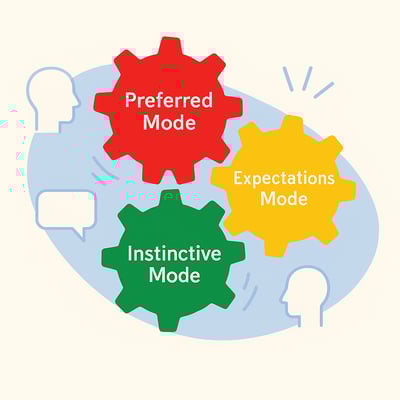
The Model at a Glance
-
Preferred Mode (Peak Performance): Activities that feel rewarding vs. draining; where you’re most productive.
-
Expectations (Backup Style): How you feel people ought to approach, manage, and cooperate with you; the listening “gatekeeper.”
-
Instinctive Mode (Survival): What charges vs. drains your battery under pressure: motivations, learning style, trust, fear, empowerment.
The Four Colors (quick map)
Green: methods, systems, rules, accuracy, stability
Red: outcomes, urgency, independence, directness
Yellow: flexibility, optimism, influence, participation
Blue: inquiry, creativity, depth, freedom
Five Principles of Behavioral Alignment
-
Clarity beats charisma. Clear behavioral expectations outperform personality theater.
-
Context shapes behavior. Preference is stable; Expectations and Instinctive Mode shift with pressure and environment.
-
Accountability ≠ personal attack. Name the behavioral pattern, not the person.
-
Job fit is about activities, not titles. People thrive where Preferred activities and Instinctive needs meet role demands.
-
Change sticks when it’s daily. Micro‑cues in 1:1s and standups beat one‑off offsites.
Teach‑Through: The Three Dimensions
Preferred Style: “What energizes my daily work?”
Teach: Preferred clues you into activities you like most and how you manage at your best. When you’re forced far from it for long, you style‑shift to cope.
Leader move: Map roles to Preferred activities; use rotations sparingly and with support.
Snapshots
-
Green: Structured, detail‑driven, reliable. Watch‑out: reluctance to delegate; stress rises when rushed.
-
Red: Direct, goal‑oriented, fast to act. Watch‑out: impatience with ambiguity or long, open‑ended work.
-
Yellow: People‑centric, flexible, energizing. Watch‑out: follow‑through and risk checks without Green support.
-
Blue: Creative, conceptual, self‑directed. Watch‑out: rigid deadlines; maintenance work after the build.
Try this (5‑minute exercise):
List your three most energizing tasks this week. Circle the ones your role rewards. Square the ones your role requiresbut drain you—then plan a support or swap.
Expectations: “How do I feel people ought to interact with me?”
Teach: Expectations are socialized early. Meet them and people listen; violate them and defensiveness flips on.
Leader move: Coach teams to open conversations by meeting the other person’s Expectations.
Approach vs. Avoid (cooperation cues)
| Dominant Expectation | Approach | Avoid |
|---|---|---|
| Green | Lead with facts, steps, and consistency | Vague asks, moving targets, optimism without detail |
| Red | Be brief; state goal, ask, deadline | Long preambles, passive tone, “why it won’t work” |
| Yellow | Warm intro + big picture; invite participation | Negativity, public criticism, exclusion |
| Blue | Ask for ideas; allow Q&A and time to think | “No questions,” rigid directives |
Try this (meeting opener):
“Here’s the goal, the ask, and the timeline” (Red).
“Here’s the process and the why behind each step” (Green).
“Here’s the big picture; I’d love your input” (Yellow).
“Here are two viable options; let’s explore trade‑offs” (Blue).
Instinctive Mode: “What do I need to feel secure and empowered under pressure?”

Teach: Instinctive Mode predicts how you learn, what you trust, how fear shows up, and what empowers you. Most people around you have different needs.
Leader move: Under stress, coach to what charges the battery not to what you wish the person needed.
Charge / Drain profile
-
Green: Motivated by stability and control; trusts history/docs; fears uncertainty; empowered by being in control.
-
Red: Motivated by challenge and independence; trusts movement/experience; fears dependence or lost authority; empowered by command.
-
Yellow: Motivated by recognition and group energy; trusts positive feedback; fears rejection/silence; empowered by influence.
-
Blue: Motivated by understanding and freedom; trusts non‑judgmental listeners; fears time pressure/conflict; empowered by knowledge.
Try this (coaching under pressure):
-
Green: “Walk me through the risks first; what steps secure this?”
-
Red: “Own this outcome. What’s the first move in the next hour?”
-
Yellow: “Who needs to be in the loop? Let’s announce the plan together.”
-
Blue: “What don’t we understand yet? Take 24 hours to surface options.”
Where This Works
-
Team Alignment: Create a shared language for meetings, feedback, and decision‑making.
-
Leadership Development: Coach to Expectations and Instinctive Mode in real moments, not just in theory.
-
Hiring & Job Fit: Match Preferred activities to role demands; use Instinctive needs to plan onboarding and support.
-
Conflict Resolution: Identify the trigger (usually an Expectation mismatch), then reset the approach.
-
Consultant Enablement: Use the model as your medium; make accountability practical, not personal.
What You Get

-
Individual Profile: three graphs in‑app, plus plain‑English next steps.
-
One‑to‑One Comparison: how two people cooperate best; likely friction and a next action.
-
Team Sheets: visualize collective strengths, blind spots, and risk areas.
-
Job‑Fit Analysis: align roles with Preferred and Instinctive patterns.
-
Workshops: half‑day or multi‑session; embed daily cues that stick.
-
Certification: for Consultants and HR professionals who want to deliver MyHardWired independently.
How long it takes: ~20 minutes.
Retakes: only after a major life change.
Compare: MyHardWired vs. DiSC
-
Three dimensions vs. one snapshot. MyHardWired shows Preferred, Expectations, Instinctive Mode so you can see how behavior shifts across the day.
-
From labels to levers. Tools (Comparisons, Team Sheets, Job‑Fit) translate profiles into daily behavior change.
-
Conversation‑first. We design for coaching moments, not categories.
Frequently Asked Questions
-
Is this a personality test?
No. MyHardWired maps behavioral preferences, socialized cooperation, and Instinctive needs. It’s built for conversations and decisions, not labels. -
How long does it take?
About 20 minutes in one sitting. -
What do I receive?
Your graphs appear on your profile inside the app, with plain‑English takeaways and next steps. -
When should I retake it?
Only after a major life change (new role, significant environment shift). -
How do I prevent defensiveness in conversations?
Open by meeting their Expectations (see the Approach/Avoid table), then move to content. -
How do I coach under pressure?
Coach to Instinctive Mode: what charges the battery. You’ll get farther, faster. -
What’s “mode‑shifting”?
When work demands fight Preferred activities, people lean on Expectations or Instinctive Mode to cope. Notice it; plan for it. -
Who should take it first in my org?
Start with a leadership team or pilot group. Establish language. Scale with workshops or certification. -
Can I use this for hiring?
Use insights as decision‑support for job fit and onboarding alongside interviews and skills checks. -
Will this box people in?
Only if you use it that way. The model is a conversation tool. Ask people how they prefer to be approached and verify together. -
How does MyHardWired help in standups and 1:1s?
Use Preferred to assign work, Expectations to open conversations, Instinctive to coach through stress. -
What about remote teams?
Make Expectations explicit in agendas and Slack norms; use Team Sheets to balance time for Green/Blue processing with Red/Yellow momentum. -
How is this different from “being nicer”?
It’s not niceness. It’s precision, meeting the behavioral pattern that opens listening and cooperation. -
Do I need a facilitator?
A trained facilitator ensures foundational principles are understood accelerates adoption and avoids misuse
What To Do Next
Most teams don’t need a new personality label, they need a behavioral language. MyHardWired maps Preferred Style, Expectations, and Instinctive Mode so you can lead by design, not by default. Use this page to understand to grasp the model and get the guide for a more in-depth picture.
How Behavioral Assessments Enhance Self‑Awareness for Personal Growth
Knowing who you are under pressure is the heart of real growth.
You’ve likely taken personality...

Why Traditional Leadership Metrics Don’t Measure What Matters
Most organizations measure leadership success through numbers like retention rates, productivity,...
Behavior Visibility: How Seeing What’s Hidden Raises Team Performance
Every team has two versions of itself. The one you see with roles, titles, and meetings. And the...