Wired To Work
When Meetings Stall: How MyHardWired Predicts Meeting Dysfunction
Meetings don’t fail because people don’t try. They fail when behavior mismatches run the room.
Great teams don’t assign roles by seniority. They assign by behavior and flow.
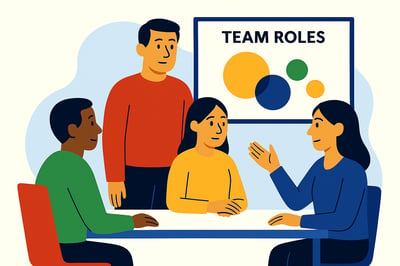
Most teams assign roles by title, tenure, or convenience. But real performance doesn’t come from who’s available, it comes from how people are wired.
When leaders match work to natural behavior instead of assumption, collaboration clicks, energy rises, and accountability stops feeling forced.
👉 Tired of expecting people to be what they’re not? Match roles to behavior instead
Every person brings three behavioral dimensions to work:
When role assignments ignore these layers, people perform, but they drain faster.
That’s why some teams look busy but feel exhausted. They’re not misaligned by skill; they’re misaligned by wiring.
Managers often say things like:
“You’re detail-oriented, so take notes.”
“You’re outgoing, so lead the meeting.”
“You’re analytical, so build the model.”
But here’s what behavior actually reveals:
The “detail-oriented” person might crave freedom (Blue) but learned to be precise because it’s expected (Green).
The “outgoing” team member might energize the group (Yellow) but burn out when asked to motivate constantly.
The “analytical” contributor might prefer quick decisions (Red) and feel trapped in research.
Labels create shortcuts. Behavior maps create alignment.
Understanding your team’s wiring clarifies who should own what kind of work:
|
Color |
Natural Strength |
Energizing Roles |
Watch For |
|
Red |
Urgency, momentum, results |
Decision-making, execution, crisis response |
Impatience, cutting corners |
|
Yellow |
Energy, connection, persuasion |
Communication, training, culture-building |
Over-commitment, avoidance of conflict |
|
Blue |
Vision, depth, innovation |
Strategy, design, problem-solving |
Over-analysis, withdrawal |
|
Green |
Structure, precision, reliability |
Systems design, compliance, project tracking |
Over-control, risk avoidance |
When these roles align with behavior, people don’t just do their jobs. They fit their jobs.
👉 Learn how MyHardWired reveals each person’s modes
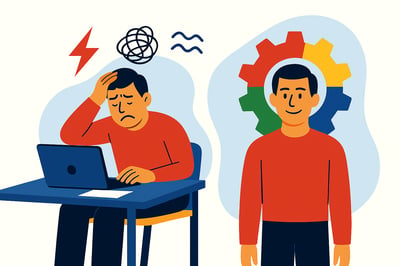
A senior team at a logistics company kept clashing.
The COO (Red) dominated conversations, driving for decisions.
The HR director (Yellow) tried to smooth the tension.
The strategist (Blue) kept raising “what if” questions.
The operations lead (Green) kept slowing down, checking data.
Everyone was frustrated. Until they mapped their MyHardWired profiles into a team sheet. They redesigned meetings around behavior, not hierarchy:
Red led decisions.
Yellow managed communication and morale.
Blue prepared strategic implications ahead of time.
Green owned accuracy checks.
Same people. Same goals. Less friction.
Energy returned because contribution matched wiring.
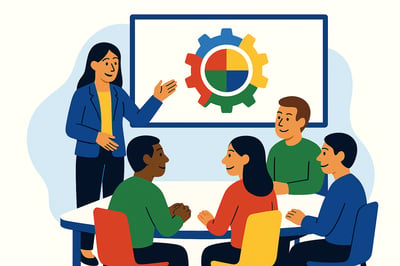
When people’s work fits their wiring:
✔️ Energy rises: people operate in their Preferred Mode more often.
✔️ Collaboration strengthens: conflict becomes complementary.
✔️ Turnover drops: people stop leaving jobs that drain them.
✔️ Leaders gain clarity: delegation becomes strategic, not reactive.
Behavioral alignment doesn’t just improve morale. It improves output per unit of energy.
Before your next project kickoff, ask yourself:
Teams don’t get tired from doing too much. They get tired from doing work that fights their wiring.
This article showed one layer of team alignment. The full guide reveals the rest like motivation, stress, and communication patterns that power results.
For Individuals → Learn how to channel your natural strengths daily
For Teams → Realign responsibilities to boost energy and accountability
For Consultants → Add a predictive behavioral lens to your client programs
Meetings don’t fail because people don’t try. They fail when behavior mismatches run the room.
Promotion rewards you. MyHardWired reveals what it costs.
Discover how MyHardWired 360-Degree Feedback closes the gap between self-perception and observed behavior to improve leadership and growth.
Be the first to get new articles on Preferred Style, Expectations, and Instinctive Mode and practical ways to lead, coach, and hire in alignment with how people are actually wired.