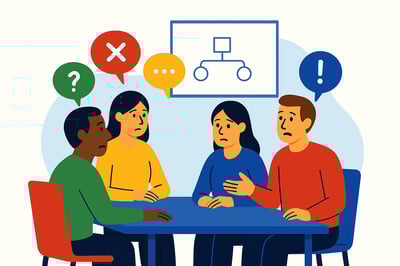
Every team has rules, written or not.
Some are printed in handbooks. Others live quietly in people’s heads.
Those invisible rules are what really drive behavior.
They shape how people speak, listen, make decisions, and react when things go wrong.
When those unspoken rules don’t match, trust erodes fast.
Not because people don’t care, but because they’re playing by different expectations.
👉 Curious what everyone on your team really expects from you?
What “Rules of Engagement” Really Mean
In the MyHardWired model, the Expectations Mode explains how we learned to gain cooperation.
It’s the socialized layer of our wiring, how we were taught to be “good teammates.”
Some people expect structure.
Some expect speed.
Some expect inclusion.
Some expect space to question.
When those expectations aren’t visible, misinterpretations multiply:
“They’re controlling.”
“They’re indecisive.”
“They don’t listen.”
“They overthink everything.”
Each of those reactions is a behavioral mismatch, not a moral flaw.
The Trust Problem: When Expectations Collide
Trust doesn’t disappear in one moment. It drains through small behavioral misses like what we expect from others but never say out loud.
Mini Scenario
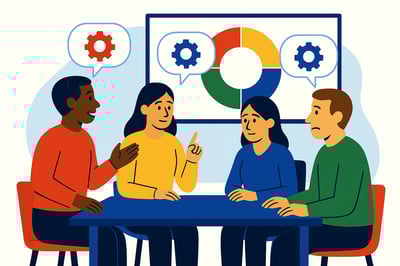
A new project manager joins a cross-functional team.
- She expects punctuality and precision. (Green Expectations)
- Her creative partner expects open brainstorming before planning. (Blue Expectations)
- The team lead expects upbeat, flexible communication. (Yellow Expectations)
Within two weeks:
Deadlines feel rushed. Meetings feel messy. Energy drops.
Nothing “big” happened, just unspoken expectations clashing under pressure.
How Expectations Show Up by Mode
Color
|
Expectation
|
When Met
|
When Missed
|
|
Green
|
Rules, facts, order
|
Calm, cooperative
|
Becomes defensive, cites policy
|
|
Red
|
Clarity, urgency, direction
|
Engaged, decisive
|
Gets impatient, pushes too hard
|
|
Yellow
|
Positivity, inclusion, tone safety
|
Energized, supportive
|
Feels rejected, over-commits
|
|
Blue
|
Freedom, discussion, understanding
|
Reflective, innovative
|
Withdraws, over-analyzes
|
When you know what people expect, you can meet them halfway. When you don’t, every interaction feels like a trust test.
The Unspoken Rules That Break Teams
“Don’t question leadership.”
“Keep emotions out of meetings.”
“Decisions need everyone’s input.”
“Speed matters more than perfection.”
These sound like values, but they’re often behavioral defaults shaped by Expectations Mode.
Without conversation, they become invisible tripwires.
Leaders think they’re setting standards; teams experience control.
Teams think they’re collaborating; leaders experience chaos.
👉 Wonder why some teammates click instantly and others clash? See what their behavior is actually expecting
Tools to Surface the Unspoken
- Ask Before Assuming
Start meetings with:
“What do you need from me to feel clear and confident today?”
It surfaces expectations before frustration builds.
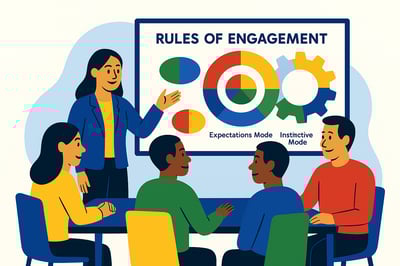
- Create a Team “Rules of Engagement” Board
List what helps and what hinders trust.
For example: Red: “Give me the headline first.” Yellow: “Keep tone positive.” Blue: “Let me ask questions before we decide.” Green: “Show the process first.”
- Normalize Language Around Modes
Encourage short check-ins: “I’m in my Green mode right now. I need to see the plan.” “I’m switching to Red. Let’s move from options to decisions.”
When teams speak this way, expectations become shared language, not silent assumptions.
Insight Check
Every leader communicates expectations whether it is spoken or not.
The question is: are they clear or just implied?
Ask yourself:
- What do I quietly expect from others that I’ve never said?
- When do I feel most defensive and what expectation just got missed?
- Does my tone invite cooperation or signal judgment?
- How can I model clarity by naming what I need?
Teams don’t break because people stop caring.
They break because they stop understanding each other’s rules.
Explore the Entire Framework
When you can see expectations, you can reset them. This guide walks you through mapping and managing behavioral trust across teams.
Get The Guide
Where To Go Next
For Individuals → Learn to communicate expectations clearly and invite the same clarity back
For Teams → Turn invisible rules into shared agreements that build lasting trust
For Consultants → Guide teams to align behavior and rebuild cooperation at scale