Wired For Growth
The Relationship Reset: How Awareness Ends Repeating Misunderstandings
Most fights repeat because behavior gets ignored. Resetting awareness changes the pattern.
First impressions count. When the first diagnostic is behavioral, trust begins earlier.
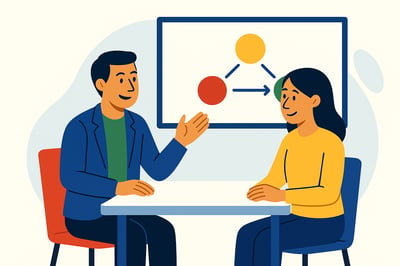
First impressions are not just chemistry. They are clarity. In consulting, the first conversation sets the tone for everything that follows.
Most discovery calls sound the same. Polite questions. A few insights. A proposal. In a crowded market, that approach blends into the background.
Clients do not remember another intake. They remember the consultant who reveals something true about their team before anyone asks. That is the power of behavior insight.
👉 Want discovery calls that feel different. Lead with behavior insight
Your first meeting is not about proving expertise. It is about creating curiosity. Behavioral questions move you from surface information to real diagnosis.
Instead of asking, what are your main challenges, try this:
When deadlines tighten, how does your leadership team respond. Do they accelerate, pause for data, rally the group, or retreat to analysis.
One question like that reveals three things immediately.
Which Mode dominates, Preferred, Expectations, or Instinctive. Which Colors appear under stress, Red urgency, Yellow optimism, Blue reflection, Green structure. Where the misalignment likely lives.
Within minutes, you shift from vendor to strategic partner.
Many discovery calls collect logistics such as timelines, budgets, and pain points. Necessary, but forgettable. The differentiator is not the number of questions. It is your ability to read behavior in motion. When you speak to wiring rather than workflow, clients feel seen, not sold to. That emotional shift builds trust faster than any slide deck.
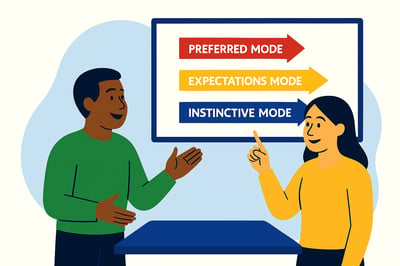
Leading with the MyHardWired model on day one gives you an advantage. You are reading how they operate before you design what to deliver.
Preferred Mode reveals what energizes them.
Expectations Mode shows the learned shoulds in the culture.
Instinctive Mode shows what happens under stress.
We look at behavior in three dimensions. How people operate at their best. How they have learned to cooperate. How they react under pressure. Most communication issues live inside those patterns.
Suggest a short mapping session to locate where energy aligns and where friction lives before scoping the full engagement.
👉 Ready to lead with measurable insight from the first call. Elevate your practice
Executives and HR leaders want someone who can see what is invisible. They want a partner who can explain why high performers clash when goals align, identify what derails communication before it happens, and predict stress behaviors that slow momentum. Behavioral mapping does exactly that without jargon or labels. When urgency, optimism, reflection, and structure become visible, collaboration stops feeling mysterious.
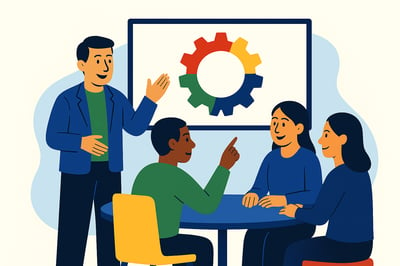
Visualize behavior early. Show a simple sample of a MyHardWired profile or a small team snapshot to move from abstract concepts to actionable conversation.
For example, from what I am hearing, your leadership team runs on urgency, connection, and structure, but those drivers collide under stress. Mapping that now will prevent reactivity later. You have already delivered value before a contract.
Consulting is not about getting clients to talk. It is about helping them hear what they have been missing.
The guide shows you how to turn a first meeting into a behavioral diagnostic that leaders can feel and defend. It explains the three Modes, how to surface predictive signals in real time, and how to frame early insights as measurable outcomes clients will fund.
For Individuals → Learn how understanding your wiring improves every professional interaction
For Teams → Use behavioral diagnostics to build trust and alignment early
For Consultants → Lead with insight from the first call and close with confidence
Most fights repeat because behavior gets ignored. Resetting awareness changes the pattern.
Discover how feedback culture fails without behavioral understanding and learn strategies to make feedback truly effective for your team.
Searching less, fitting better. Role alignment beats job title.
Be the first to get new articles on Preferred Style, Expectations, and Instinctive Mode and practical ways to lead, coach, and hire in alignment with how people are actually wired.