Wired For Growth
When Stress Feels Personal: Recognizing Your Instinctive Triggers
Stress isn’t random. It’s behavior. Recognizing triggers gives you control.
Most fights repeat because behavior gets ignored. Resetting awareness changes the pattern.
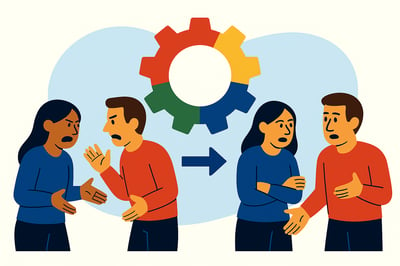
Most conflict doesn’t come from what’s said. It comes from what isn’t understood.
If you’ve ever found yourself replaying the same argument with different words, you know how exhausting it feels. The promises to “communicate better” work for a week, maybe two, until the same pattern reappears. It’s not defiance. It’s design.
Every relationship whether personal or professional carries two behavioral layers: Expectations Mode, which shapes how you believe cooperation should sound, and
Instinctive Mode, which takes over when emotion or stress enters the room.
Together, they create a rhythm. When those rhythms clash, even good intentions misfire.
Arguments rarely repeat because of content. They repeat because of wiring.
One person defines respect as directness; the other defines it as gentleness. One values structure; the other values spontaneity. One communicates to fix; the other communicates to feel heard.
They’re not speaking different languages. They’re following different rules for how communication should work. That’s what Expectations Mode really is a silent “should” about tone, pace, and trust that was wired long before the conversation began.
When stress arrives, Instinctive Mode adds its own layer. The Red pushes harder to regain control. The Yellow talks more to rebuild connection. The Blue retreats to analyze. The Green slows down to regain order. None are wrong, but when each person interprets the other’s behavior as intent, the relationship erodes instead of resets.

Awareness doesn’t mean analyzing every word. It means realizing that patterns are predictable once you know what drives them.
A leader who understands that urgency is their Instinctive language can pause before interpreting silence as disrespect.
A partner who recognizes that withdrawal is a Blue’s way of processing can give space without assuming rejection.
A colleague who knows that precision is a Green’s security signal can clarify details instead of labeling them as rigid.
Awareness doesn’t remove tension, but it removes confusion. And that is often all trust needs to return.
When you can see the wiring behind reactions, the emotional temperature changes immediately.
Conversations stop feeling personal.
Missteps turn into feedback loops, not failures.
The same disagreement becomes data about how two behavioral systems are trying to stay safe.
Once both people can name their modes, empathy replaces irritation. A shared vocabulary builds where defensiveness used to live. That’s the reset point when behavior shifts from being something you survive to something you can work with.

The Wired for Growth guide reveals how awareness moves relationships from reaction to rhythm. It explains how your behavioral modes interact under pressure and how to translate tension into trust so you stop repeating conversations and start rebuilding connection.
For Individuals → Strengthen every relationship by understanding how you and others communicate under pressure
For Teams → Build teams where behavior is transparent, trust recovers faster, and communication fuels performance
For Consultants → Equip clients with behavioral insight that resolves recurring patterns permanently
Stress isn’t random. It’s behavior. Recognizing triggers gives you control.
Success isn’t just skill. It’s behavior under pressure, alignment across roles.
Busy isn’t always productive. When you align tasks with how you are wired, you thrive instead of just survive.
Be the first to get new articles on Preferred Style, Expectations, and Instinctive Mode and practical ways to lead, coach, and hire in alignment with how people are actually wired.