What is MyHardWired

Pre‑Employment Assessments: Why Candidates’ Behavior Matters

Discover why behavioral fit is crucial in hiring and how MyHardWired assessments can help you find the right candidates for your team.
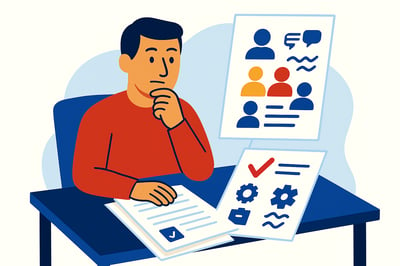

A hiring manager reviews both a skills-based resume and a behavioral profile side by side, illustrating the difference between technical ability and behavioral fit in a clean, flat MyHardWired-style illustration.

Hiring isn’t just about skills. It’s about behavior matching.

You can hire someone who nails every technical requirement. They do great in interviews, score well on skill-based tests. But six months later, you’re surprised by constant conflict, lack of adaptability, or misalignment.

Technical skills tell you what someone can do. Behavior tells you who they’ll be in the role, especially when things get hard. That’s why behavioral fit must be part of hiring criteria.

What Pre‑Employment Assessments Usually Measure

Most assessments in the hiring process focus on:

  • Cognitive ability (reasoning, logic, verbal/written skills)
  • Job-specific skills and certifications
  • Situational judgment tests (how a person might react in hypothetical scenarios)
  • Personality labels (Extrovert / Introvert, DISC types, etc.)

👉 Do your hires act the same under stress as they do in interviews?

These data points are valuable. They help you screen for minimum thresholds. But they miss two critical dimensions:

  1. How someone handles real stress
  2. Whether their behavioral wiring aligns with the role demands

The Risks of Poor Behavioral Fit

When you hire without considering behavior, you risk:

  • Culture friction: A candidate whose behavior clashes with team norms becomes a lightning rod for tension.
  • Hidden stress behavior: Someone might perform great for 2–3 months until deadlines or conflict raise the stakes. Then their reactive mode shows up.
  • Retention failure: The misfit wears them down faster than lack of pay. They exit mentally before they exit formally.
  • Constant “fixing”: You try coaching, reshuffling responsibilities, or layering processes to compensate and still feel the strain.

Poor behavior fit compounds over time. A few bad fits drain not just individual roles, but team morale, trust, and outcomes.
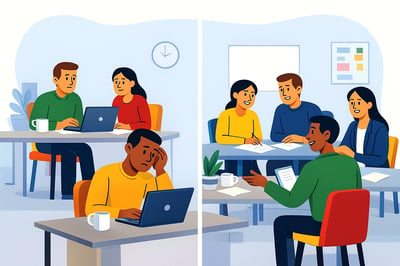
A split-scene illustration comparing a misaligned hire struggling at work while teammates look concerned on the left, with a well-aligned, collaborative team working smoothly together on the right, showing the impact of behavioral fit on team dynamics.

Examples of Mis‑Hires When Wiring Is Ignored

  • A highly skilled analyst takes a lead role in a dynamic, changing product team. That person has a Green Preferred wiring (structure, predictability). Under ambiguity, they resist change, withdraw, or overanalyze stalling progress.
  • A strong “go-getter” candidate for operations is hired into a role requiring persistent relationship building and stakeholder engagement. Their Red drive overwhelms more than motivates. Partnerships erode.
  • A creative, big-picture thinker is placed in a compliance-heavy, regulated environment. Their Blue Preferred trait chafes under rigid rules; their stress behavior becomes passive or reactive.

In all cases, the technical skills existed. It was the behavior misalignment that triggered the real failure.

How to Include Wiring in Hiring Criteria

You don’t have to throw away skill assessments. You stack them. Use MyHardWired as a filter, not a gatekeeper. Here’s how:

  • Define the behavioral demands of the role
    What behaviors must someone display frequently? Speed? Diplomacy? Structure? Influence?
  • Map traits that support those behaviors
    For example: a role requiring agility + people influence maps to Red/Yellow traits. A role demanding precision and consistency maps to Green.
  • Use behavioral assessments as part of screening
    Ask candidates to take a behavior‑based tool (like MyHardWired). Use the report to compare a behavioral match against the role’s behavioral needs.
  • Use structured interviews that probe behavior under stress
    Ask “Tell me about a time when project scope changed mid‑flight and how did you handle it?” Align their answer to the behavior expectations you defined.
  • Design onboarding & feedback loops around behavioral mismatches
    If a candidate's behavior is not a perfect fit, set up explicit support: peer pairing, role carve‑outs, process scaffolds, communication norms.

When you hire for alignment, you reduce surprises and speed up integration.

Choosing the Right Assessment Tools

Not all pre‑employment or behavioral assessments are equal. Before you adopt one, verify:

  • Validity & reliability: Does it measure what it claims and remain consistent over time?
  • Predictive under stress: Does it capture how someone will behave when things get tough?
  • Transparency: Can you see trait weights and logic?
  • Developmental clarity: Does it show where someone can grow, not just label them?
  • Industry norming: Has it been validated for the kinds of roles you hire for?

MyHardWired checks all these. It surfaces not just traits, but how behavior shifts across Modes. So you can see wiring match, not only labels.

Hiring Reset

  • List your top 3 upcoming hires or role changes.
  • Write down the behavioral traits essential for each role (e.g. adaptability, influence, precision).
  • Look at your assessment tool stack. Can MyHardWired be added or weighted?
  • Design one interview question that forces a stress moment (e.g. sudden change, conflicting priorities).
  • Ask candidates (or top performers) to take the MyHardWired assessment. Compare alignment against performance afterward.

Over time, you’ll see fewer surprises and sharper team fit.
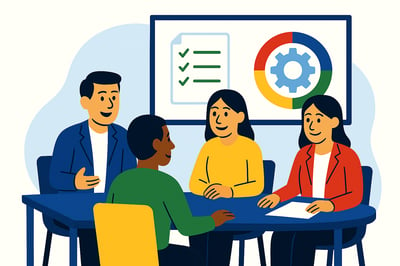
A hiring panel meets with a candidate at a table while a presentation screen displays a skills checklist alongside a circular diagram backed by a subtle MyHardWired gear in the strict color order—red top-left, yellow top-right, green bottom-left, blue bottom-right—illustrating how behavior and skills are evaluated together.

See the Science Behind the Perfect Hire

Skills tell you what someone can do. MyHardWired tells you how they’ll do it.

Get The Guide

Build From Here

For Individuals → Use your wiring insights to find the kind of roles where stress becomes strength, not strain

For Teams → Align behavioral strengths across hiring decisions to build trust from day one

For Consultants → Show clients how to make hiring predictive, not reactive, through behavior mapping

Get notified on new behavioral insights


Be the first to get new articles on Preferred Style, Expectations, and Instinctive Mode and practical ways to lead, coach, and hire in alignment with how people are actually wired.