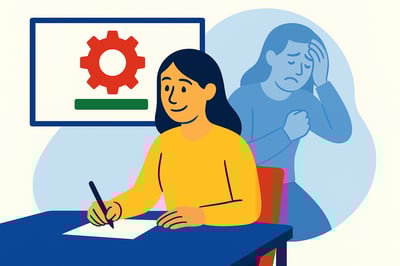
Most programs add skills. Few align them with how you’re wired.
If you’ve ever aced a workshop and then watched the skills fade by Friday, you’re not alone. A leadership skills assessment can show gaps, but it won’t make them stick unless the delivery matches your wiring and how you lead at your best (Preferred Mode), how you were taught to cooperate (Expectations Mode), and what surfaces under pressure (Instinctive Mode).
Skills don’t fail. Misalignment does.
The Hidden Reason Training Fades
Leadership decks are tidy. Real days aren’t. Under pressure, conflict, deadlines, ambiguity, people don’t default to new skills; they default to behavioral patterns.
- Preferred Mode fuels your best work.
- Expectations Mode is your socialized “ought-to” playbook.
- Instinctive Mode runs the show under stress.
Most leadership development programs teach boilerplate ‘things to do’.
👉 Ever wonder why your leadership training fades so fast?
A Quick Story: Skilled, Yet Drained

Marie, a VP of Operations, is precise and reliable, a strong Green in her Preferred Mode. A recent bootcamp told her to “decide faster and empower more.” She tries. In meetings, she skips details, pushes decisions, and delegates loosely.
It works for two days, and then her Instinctive Green needs (structure, predictability) are denied. Stress rises. She clamps down, adds checkpoints, and re-requests data. The team feels whiplash. Marie thinks she lacks confidence. She doesn’t. She’s leading against her wiring.
Once Marie sees her MyHardWired profile, she shifts: still decides quickly, but timeboxes a Green-friendly 10-minute fact check; delegates with clarity; schedules a weekly outcomes review. Same skills. Now they fit and stick.
Before Another Training, Check Alignment
Ask three quick questions before you assume more training is the answer:
If the answer to #2 or #3 is yes, you don’t need more training. You need to align your behavior.
How Behavior Makes Skills Stick
Match skills to who you are.
- Green: process, structure, repetition.
- Red: direct, outcome-first, short cycles.
- Yellow: collaborative, visible, feedback-driven.
- Blue: meaning, questioning, reflection.
Design for Instinctive needs.
- Green: stability, order, history.
- Red: autonomy, movement, quick wins.
- Yellow: connection, recognition.
- Blue: freedom, understanding.
Make Expectations explicit. Agree on how to approach each other so listening stays on facts first for Green, brevity for Red, inclusion for Yellow, questions for Blue.
Audit Your Alignment
- Pick one skill you’ve been practicing. Write how you usually apply it.
- Label the gear you’re in: Preferred, Expectations, or Instinctive.
- Adjust the delivery to fit your Color. Add process (Green), add speed (Red), add dialogue (Blue), add participation (Yellow).
- Where do you feel most energized using a leadership skill?
- Which approaches drain you, even when you’re “performing well”?
- When stress hits, do you speed up, slow down, smooth over, or analyze?
You’ll notice: the skill feels more natural, takes less effort, and lands with more impact.
Those answers point to your wiring. If you need a deeper read, consider a leadership skills assessment like MyHardWired that models behavior in motion and not just labels.
See the Whole Equation

Leadership doesn’t fail because you lack ability. It fails when it fights your behavior.
The best leaders don’t just memorize skills. They apply them in ways that match their wiring. That’s why some leadership training fades and some sticks.
You’ve learned why skills fade. Now see how to make them last. MyHardWired is the missing variable.
Get The Guide
Where To Go Next
For Individuals → Turn training into transformation by applying skills that match your natural behavior
For Teams → Redesign leadership programs around how people actually sustain behavior change
For Consultants → Build client programs that stick because they’re wired for it, not willed into it