What is MyHardWired

The Science Behind Behavior Assessments: Validity, Reliability, and What to Look For

Discover the science behind reliable and valid behavior assessments and learn how to choose the right tool for leadership and growth.
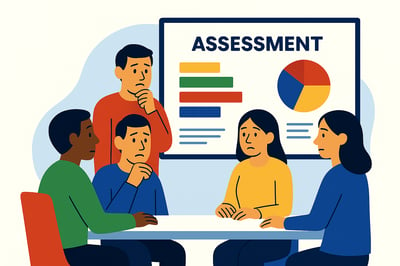

A diverse group of colleagues sit together reviewing a generic assessment dashboard on a screen, appearing thoughtful and unsure as they discuss the accuracy and trustworthiness of the results.

Not all assessments are created equal. Know what builds trust and accuracy.

You may have seen assessments with bold claims: “40% more predictive,” “validated across industries,” “uses AI.” But behind every tool, there are scientific underpinnings that make or break whether it’s useful.

If you’re going to trust a behavior assessment for hiring, leadership development, or self‑growth, you need to know how to read its science.

This post walks you through what validity and reliability mean, where many popular tools go wrong, how MyHardWired builds trust in its measurement, and the right questions to ask before you adopt any assessment.

What Do Validity and Reliability Even Mean?

Let’s break it down plain:

  • Reliability is consistency. If you took the same test under the same conditions twice, would you get a similar result? A reliable test gives stable scores over time (absent major life change).
  • Validity is truth. Does the test measure what it claims to measure? Does it predict real-world outcomes (e.g. leadership effectiveness, team cohesion, stress behavior)?

Think of reliability as the tool being precise. Validity is the tool being accurate.

If a tool is reliable but not valid, you’ll get consistent but useless results. If it's valid but not reliable, it’s unstable and unpredictable.
Common Pitfalls in Popular Tools

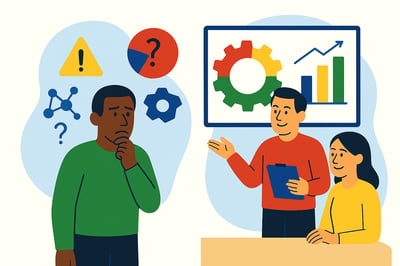
A split-style illustration showing the contrast between flawed assessment science and reliable measurement. On the left, a man looks confused surrounded by abstract warning icons and unclear data symbols. On the right, a consultant confidently presents clean charts and a four-quadrant MyHardWired gear in the correct color order—red top-left, yellow top-right, green bottom-left, blue bottom-right—while a colleague listens attentively.

Many assessments in the marketplace struggle in one or both areas. Here are typical weak spots:

  • Over‑generalization
    The tool claims to be a “leadership predictor” but was normed on students. The sample doesn’t match your world.
  • Lack of longitudinal evidence
    It gives a snapshot, but no data shows whether scores correlate with performance over time.
  • Low retest reliability
    People get very different results when they retake the test a few weeks later, suggesting noise in measurement.
  • Context neglect
    Tools treat behavior as static, ignoring that people change under stress. That kills predictive accuracy.
  • Opaque scoring & weighting
    Users don’t see how traits are weighted or how scores were derived. Hard to trust what you can’t see.

When an assessment has these issues, it’s tempting to dismiss it entirely. But what you really want is to filter better, not reject all tools.

How MyHardWired Builds Predictive Reliability

We built MyHardWired with these principles in mind:

  • Behavior in motion, not static traits
    We don’t only record your behavior at baseline. We map how you shift across Preferred, Expectations, and Instinctive Modes. Predictive power comes from how you move, not just where you score.
  • Rigorous norming across populations
    The model has been tested across industries and roles to ensure results are relevant, not one-size-fits-all.
  • Behavioural retest consistency
    The platform is designed to re-measure over time, checking that scores don’t wildly deviate unless real change has occurred.
  • Transparent metrics
    Users see trait weights, distributions, and how Modes combine. This transparency builds confidence in what they get.
  • Ongoing validation
    MyHardWired tracks how profiles predict outcomes (leadership transitions, team performance, engagement) to continually refine the model.

The result: a tool that doesn’t just tell you “who you are,” but gives you a readable, shift-aware map you can trust over time.

👉 Want to know if your assessment actually holds up under pressure?

What to Ask Before You Adopt an Assessment Tool

Don’t take marketing at face value. Use these questions as a filter:

  • What’s the sample?
    Was the instrument normed on people like you (industry, leadership level)?
  • Is retest reliability available?
    If you retake in a few weeks, do core results hold?
  • Does it predict outcomes?
    Is there evidence linking scores to real metrics (turnover, promotion, performance)?
  • How do they treat change?
    Does it allow for behavior under stress, not just baseline?
  • How transparent are trait weights and scoring?
    Can users see how results were derived?
  • How often is the model revisited?
    Is there a process for model improvement and validation over time?

If a tool fails more than one of those checks, treat it cautiously.

Why Science Matters for Leadership, Teams, and Growth

Blog 10 - What Is MyHardWired - 1

Investing in assessments without rigor is dangerous. You risk:

  • Basing leadership decisions on flawed insight
  • Trust breakdown when results don’t match experience
  • Coaching confusion when behaviors don’t align with labels
  • Undermining credibility with stakeholders who expect robust data

But when you have a tool grounded in validity and reliability, you gain:

  • Confidence in your decisions (hiring, development, team alignment)
  • Consistency in observing shifts over time
  • Clarity in interpreting misalignment and coaching paths
  • Credibility when you bring data to leadership or HR dialogues

Measurement isn’t magic. But rigorous measurement becomes a foundation, not a gimmick for leadership insight.

Apply It Now

  1. Think of an assessment you’ve used (or considered).
  2. Ask yourself: does it check the questions above (norming, retest reliability, predictive evidence)?
  3. Compare that with how well the results aligned with real behavior on your team.
  4. Pick one decision (role, development plan, promotion) and imagine it backed by a tool with strong validity & reliability.
  5. Journal how different you feel about the decision.

Because when your data is reliable, so is your leadership.

Ready to Go Deeper?

Validity and reliability are just the foundation. The real power is understanding how behavior moves under pressure.

See how MyHardWired translates complex data into simple, actionable insight.

Get The Guide

Other Paths to Build Awareness

For Individuals → Turn self-awareness into measurable progress. Learn how reliable data can guide your growth with clarity.

For Teams → Strengthen collaboration with insights you can trust so every conversation starts from shared understanding.

For Consultants → Deliver science-backed results that clients believe in and keep using long after the session ends.

Get notified on new behavioral insights


Be the first to get new articles on Preferred Style, Expectations, and Instinctive Mode and practical ways to lead, coach, and hire in alignment with how people are actually wired.