The Consultant's Edge
Mastering Client Engagement: The First Conversation with Behavior Insight
First impressions count. When the first diagnostic is behavioral, trust begins earlier.
Behavior-based feedback before performance reviews transforms vague critiques into actionable insights, fostering growth and enhancing leadership.

Reviews wrapped in behavior give you something you can actually act on.
Most performance reviews circle around outcomes: sales numbers, project completion, cost targets. Sometimes there’s feedback sprinkled in: “You need to communicate better,” “Be more strategic,” “Meet with your team more often.”
Good intentions. But vague feedback rarely changes behavior. When you anchor feedback to what someone does, especially in the moment, it becomes actionable, not aspirational.
Behavior‑based feedback lets you see how someone leads moment by moment, not just by outcome. For leaders, that pre‑review feedback is gold.
Generic feedback often fails because:
When feedback lives in the déjà vu zone, it loses impact. Leaders feel like they’re doing the same work over and over, with little change.
👉 What if feedback stopped judging and started decoding?
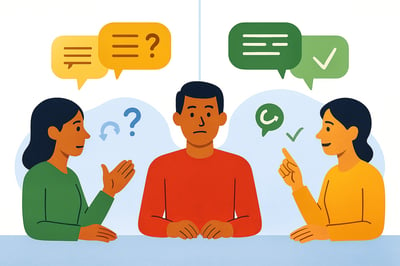 Behavior‑based feedback is different because:
Behavior feedback bridges the gap between insight and change. It gives someone a compass, not a critique.
MyHardWired gives you a map, not just labels. With that map in hand, feedback is richer:
Now feedback becomes:
“In our last decision meeting, I noticed you switched from your Preferred to your Instinctive mode. You became more directive and less open to alternatives. That change shifted the tone. I wonder if anchoring in your Preferred Mode first might give others permission to engage before you close the conversation.”
That statement is specific, actionable, and grounded in behavior and not judgment.

Here are ways to use behavior-based feedback before the formal review:
Using feedback this way makes the formal review less surprising, more relational, and more growth-oriented.
These feedback moves start from curiosity, respect, and behavioral clarity, not critique.
You may discover that the feedback is received, not resisted.
You’ve seen how behavior sharpens feedback.
Now map your own patterns and see how self-awareness changes every review.
For Individuals → Ask for feedback tied to observable behavior, not personality, to turn reviews into growth moments
For Teams → Build shared feedback language that normalizes real-time coaching instead of annual surprises
For Consultants → Integrate behavioral tools into performance systems to help clients shift faster and lead stronger.
First impressions count. When the first diagnostic is behavioral, trust begins earlier.
Behavior-based consulting transforms leadership coaching, providing actionable insights and lasting impact, unlike generic models that fail to stick.
Discover why behavioral fit is crucial in hiring and how MyHardWired assessments can help you find the right candidates for your team.
Be the first to get new articles on Preferred Style, Expectations, and Instinctive Mode and practical ways to lead, coach, and hire in alignment with how people are actually wired.