What is MyHardWired
How Your Leadership Style Can Flip Under Stress
Discover the science behind reliable and valid behavior assessments and learn how to choose the right tool for leadership and growth.
Stress reveals more than you think. Teams show consistent behavior when under pressure.
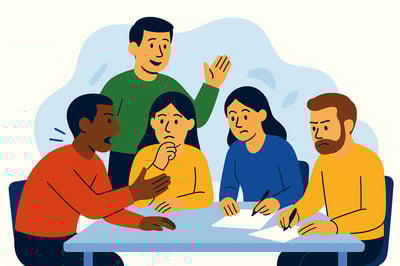
Every team looks calm until the pressure hits. A tight deadline, a critical client, an unexpected crisis, and suddenly, the mood shifts. Some people speed up. Others slow down. A few go quiet.
That’s not chaos. That’s the Instinctive Mode which accounts for the deepest layer of behavior that surfaces when stress rises or safety drops.
Stress doesn’t make people unpredictable. It makes them more consistent.
Once you know what to look for, you can see the pattern before it breaks trust.
Under pressure, everyone moves back to what feels secure:
Some take control to protect order.
Some push urgency to protect outcomes.
Some smooth tension to protect relationships.
Some question deeply to protect understanding.
Individually, those instincts make sense. But in teams, they collide because everyone’s trying to regain control in a different way.
You’re not just managing the problem anymore. You’re managing how people react to the problem.
The project lead (Red Instinct) is driving hard: “We need decisions now.”
The marketing manager (Yellow Instinct) tries to lift morale: “We’ve got this, everyone, keep smiling!”
The designer (Blue Instinct) hesitates: “Have we validated the user flow yet?”
The compliance analyst (Green Instinct) doubles down on details: “We can’t skip the checklist.”
Each person is right. But when their instincts collide, communication breaks: Red thinks Green is slowing things down. Green thinks Red is reckless. Yellow thinks everyone’s too tense. Blue feels unheard.
The deadline doesn’t create conflict. It just exposes wiring that was already there.
Knowing these archetypes helps you anticipate before stress escalates.
Focuses on: structure, compliance, control.
Signal: Becomes rigid or critical when uncertainty rises.
They need: predictability and clear boundaries.
Leader cue: “We’ll keep your control point. Tell me the single step that must stay.”
Focuses on: action, speed, results.
Signal: Pushes decisions, skips reflection.
They need: ownership and quick wins.
Leader cue: “You’ve got the green light, move on this. Check back in one hour.”
Focuses on: tone, relationships, belonging.
Signal: Avoids tension, agrees too quickly, takes on too much.
They need: reassurance and acknowledgement.
Leader cue: “We’ll keep tone positive. You don’t have to fix everyone. Let’s just support communication.”
Focuses on: meaning, rationale, fairness.
Signal: Questions direction or pauses to process.
They need: space to reason and contribute perspective.
Leader cue: “Pressure-test the biggest risk in five minutes. Then we’ll decide.”
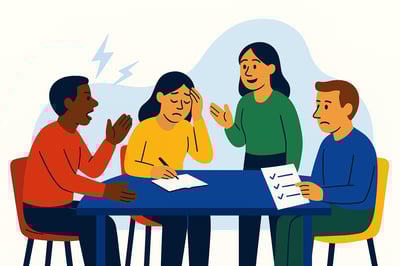
Most leaders try to fix the moment. The outburst, the silence, the overdrive. But those reactions are predictable once you understand behavior.
Knowing each person’s Instinctive Mode means you can:
✔️ Read early stress signals before they derail progress.
✔️ Assign recovery steps based on what restores security.
✔️ Prevent repeat conflicts by meeting behavioral needs upfront.
👉 Learn how Instinctive Mode predicts stress reactions
When leaders misread stress behavior, teams lose trust, not in the mission, but in psychological safety.
The Rule Enforcer feels unheard when structure is skipped.
The Urgency Driver feels trapped when the process drags.
The Harmonizer feels exposed when the tone turns harsh.
The Challenger feels dismissed when logic is ignored.
Trust isn’t built in calmness. It’s built in crisis when people see you understand how they cope.
Before the next high-pressure week, ask yourself:
When you can answer those questions, you stop reacting and start anticipating.
That’s what separates managers from behavioral leaders.
You’ve seen how Instinctive Modes surface under stress. How do all three behavioral layers interact?
For Individuals → Turn stress into a signal, not a setback
For Teams → Create a shared language for pressure and performance
For Consultants → Equip leaders to spot stress patterns and coach recovery in real time
Discover the science behind reliable and valid behavior assessments and learn how to choose the right tool for leadership and growth.
Learn why leadership skills often fade and how aligning them with your natural behavior can make them stick for lasting impact.
What you can’t see often causes the breakdown. Diagnostic tools bring hidden communication issues to light.
Be the first to get new articles on Preferred Style, Expectations, and Instinctive Mode and practical ways to lead, coach, and hire in alignment with how people are actually wired.