The Consultant's Edge
The Hidden Cost of Blending In: Why Being Generic Undercuts Consulting Fees
Cheap always looks easy. But clients pay for value they believe in , not “good enough.”
Discover how understanding behavioral wiring can transform conflict from a source of frustration to a tool for effective leadership and team collaboration.
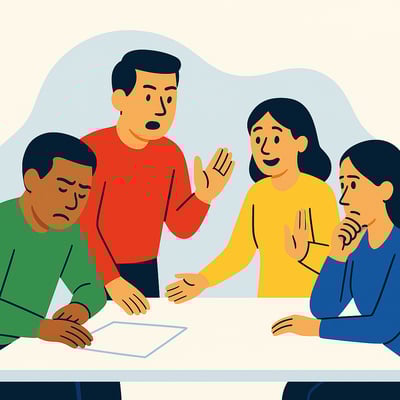
Most leaders see conflict as a problem to avoid or a signal of weakness.
In reality, conflict is usually a behavioral mismatch like two people wired differently, reacting under pressure.
MyHardWired doesn’t just point out tension. It shows what drives it: not malice, not intent, but how people process, communicate, and protect themselves when stress rises.
Conflict doesn’t make you weak. It exposes your wiring.
When tension flares in a meeting, it rarely starts with values or goals. It starts with wiring.
None of them are wrong. But without awareness, each sees the other as difficult. Red calls Green “rigid.” Green calls Red “reckless.” Yellow sees Blue as “negative.” Blue sees Yellow as “shallow.”
👉 Tired of walking on eggshells in meetings?
What looks personal is actually behavioral conflict.
A healthcare leadership team was stuck.
Every meeting ended in frustration. They assumed it was personality clash. In reality, it was stress-driven conflict. Each person defaulted to their Instinctive Mode when deadlines loomed.
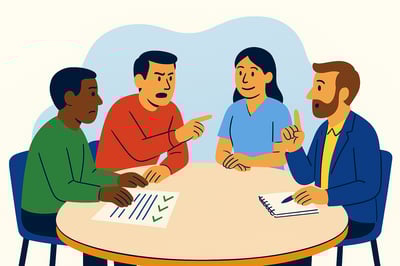
Once they saw their MyHardWired profiles, the tension shifted. They built a new cadence: outcomes first (Red), facts next (Green), group feedback (Yellow), then questions (Blue). Suddenly, decisions moved forward without anyone compromising their wiring.
When stress rises:
These are survival responses, not personal attacks. Leaders who recognize this stop asking, “What’s wrong with them?”and start asking, “What mode are they in?”
That shift reduces defensiveness and prevents escalation.
Instead of avoiding conflict or bulldozing through it, leaders can reframe it.
Conflict doesn’t disappear, but it becomes manageable.
Recall your last conflict and write down what triggered it. Ask yourself: “Was this about intent or different behaviors under stress?”
Translate the reactions:
Revisit the same situation, but respond to wiring, not words. Watch the tone shift.
Notice how much lighter it feels when you see conflict as wiring and not weakness.

Conflict isn’t a sign of weakness. It’s a sign of difference. When you understand what’s underneath like Preferred strengths,
Expected playbooks, Instinctive stress reactions, you can respond with clarity instead of frustration.You’ve seen how stress can turn wiring into friction, but that’s just one dimension of your behavioral map.
For Individuals → Build confidence by turning conflict moments into clarity moments
For Teams → Reduce wasted training spend by connecting leadership development to daily behavior
For Consultants → Deliver leadership programs that last by anchoring them in behavior
Cheap always looks easy. But clients pay for value they believe in , not “good enough.”
Discover how your inherent behavior affects decision-making under pressure and learn techniques to align team dynamics for better outcomes.
“When stress hits, your behavior speaks. Are you listening?”
Be the first to get new articles on Preferred Style, Expectations, and Instinctive Mode and practical ways to lead, coach, and hire in alignment with how people are actually wired.